Why Contraception Matters More Than Ever
I recently travelled to Bogotá, Colombia, to attend the International Conference on Family Planning (ICFP), a global gathering that brought together more than 5,000 people from over 100 countries. Participants included activists, health care providers, researchers, policy makers, civil society organizations and governments.
Together, we reflected on progress, shared evidence and best practices, and recommitted to advancing sexual and reproductive health and rights (SRHR) around the world. The conversations in Bogotá made one thing clear: while progress on SRHR is possible, it is fragile and increasingly under threat.
At Oxfam, we are unequivocal: access to contraception is a fundamental human right and lifesaving. Contraception enables bodily autonomy by giving people power and control to decide if, when and how many children to have. It supports safer, healthier, pleasurable sex and relationships, and ensures that all people can make free, informed decisions about their bodies, health and futures.
And it saves lives. A major study in the Lancet found that contraceptive use has contributed to a significant reduction in maternal mortality, preventing 77,400 maternal deaths in 2023 alone.

Shrinking Funding and Growing Backlash Threaten SRHR Gains
Despite overwhelming needs, speakers at ICFP described devastating funding cuts to SRHR globally. Declining development assistance, particularly from the United States and Europe, has created dangerous gaps in access to SRH services.
According to FP2030’s 2025 impact report, the termination of USAID family planning funding—which previously accounted for 41% of all donor government funding for family planning—has caused unprecedented disruption. Research from Guttmacher estimates that the U.S. cuts will deny 47.6 million women access to contraception, resulting in 17.1 million unintended pregnancies and 34,000 preventable maternal deaths.
Compounding these funding cuts is a growing global backlash against SRHR. Speakers highlighted the increasing influence of organized and well-funded anti-rights and anti-gender actors who deliberately spread misinformation and undermine democratic institutions to roll back hard-won gains.
This backlash targets bodily autonomy, gender equality, and civic space, with particularly harmful impacts on women, young people, and marginalized communities.
What Works: Community-Led, Rights-Based SRHR in Action
Against this backdrop of shrinking funding and intensifying backlash, evidence-based advocacy, movement wide solidarity, and sustained investment in rights-based SRHR programming is more urgent than ever.
Since 2018, Oxfam has been working in rights-based comprehensive SRHR programming to increase bodily autonomy, agency, and enjoyment of SRHR. Through the Sexual Health and Empowerment Project in the Philippines and Her Future, Her Choice Project in Ethiopia, Malawi, Mozambique, Zambia, and Canada, Oxfam and partners have made a real difference.
These projects have increased knowledge about contraception, built support for SRHR, reduced teenage pregnancy rates, strengthened SRH service provision and successfully advanced policy and legal change.
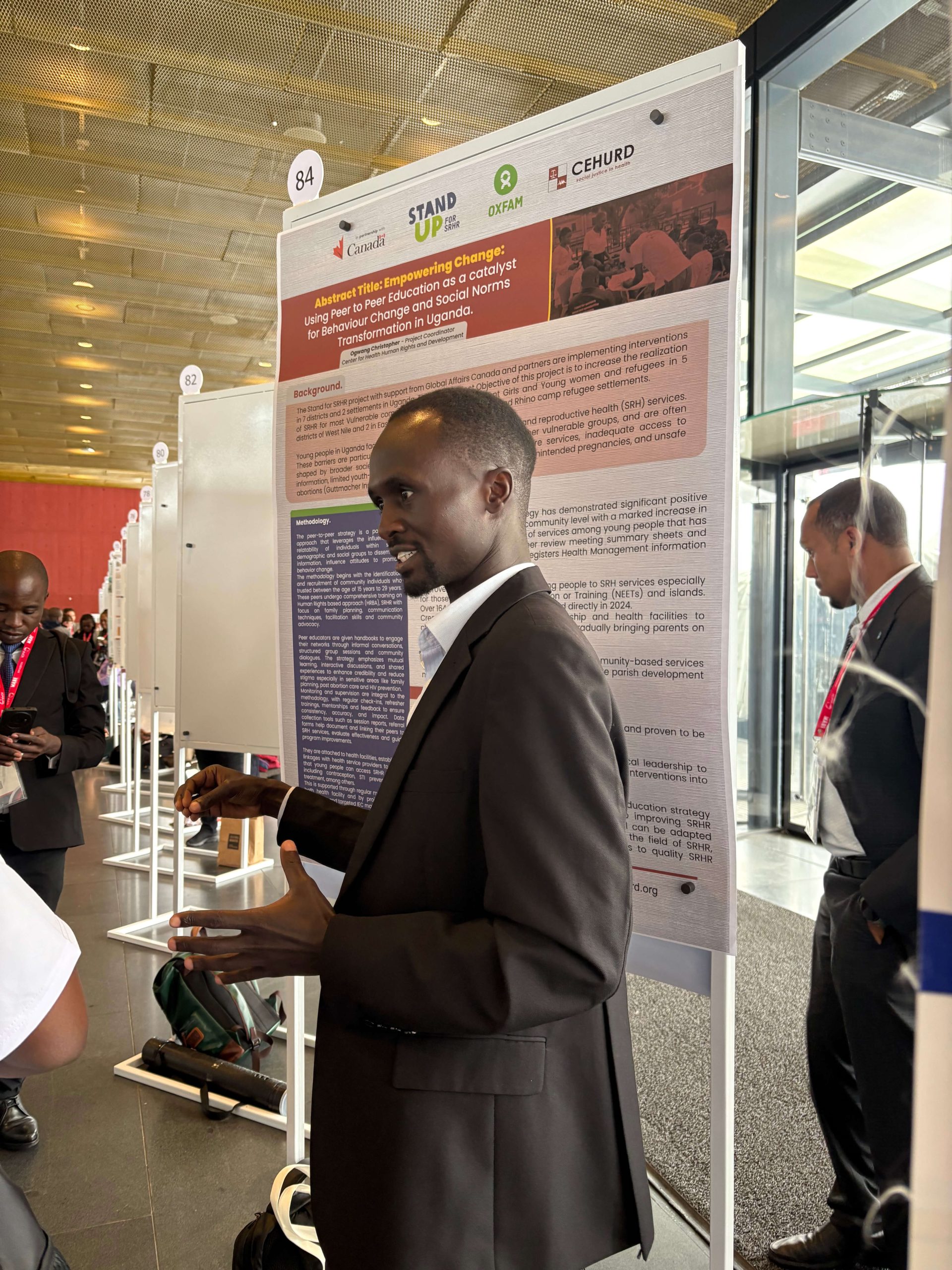
At ICFP, partners from Oxfam’s Stand Up for SRHR project in Uganda, Mozambique and Canada shared how this work is delivering results in communities. From Uganda, Christopher Ogwang from the Center for Health Human Rights and Development (CEHURD) described how peer education is enabling young people to access SRHR information in stigma-free and safe ways. Young people are trained and supported to lead conversations with their peers on contraception, abortion, STIs, and HIV, and to connect them with trusted health facilities. In 2024 alone, this approach resulted in 1,644 young people referred to SRH services. Peer education is a practical, low-cost and sustainable way to expand access to care.
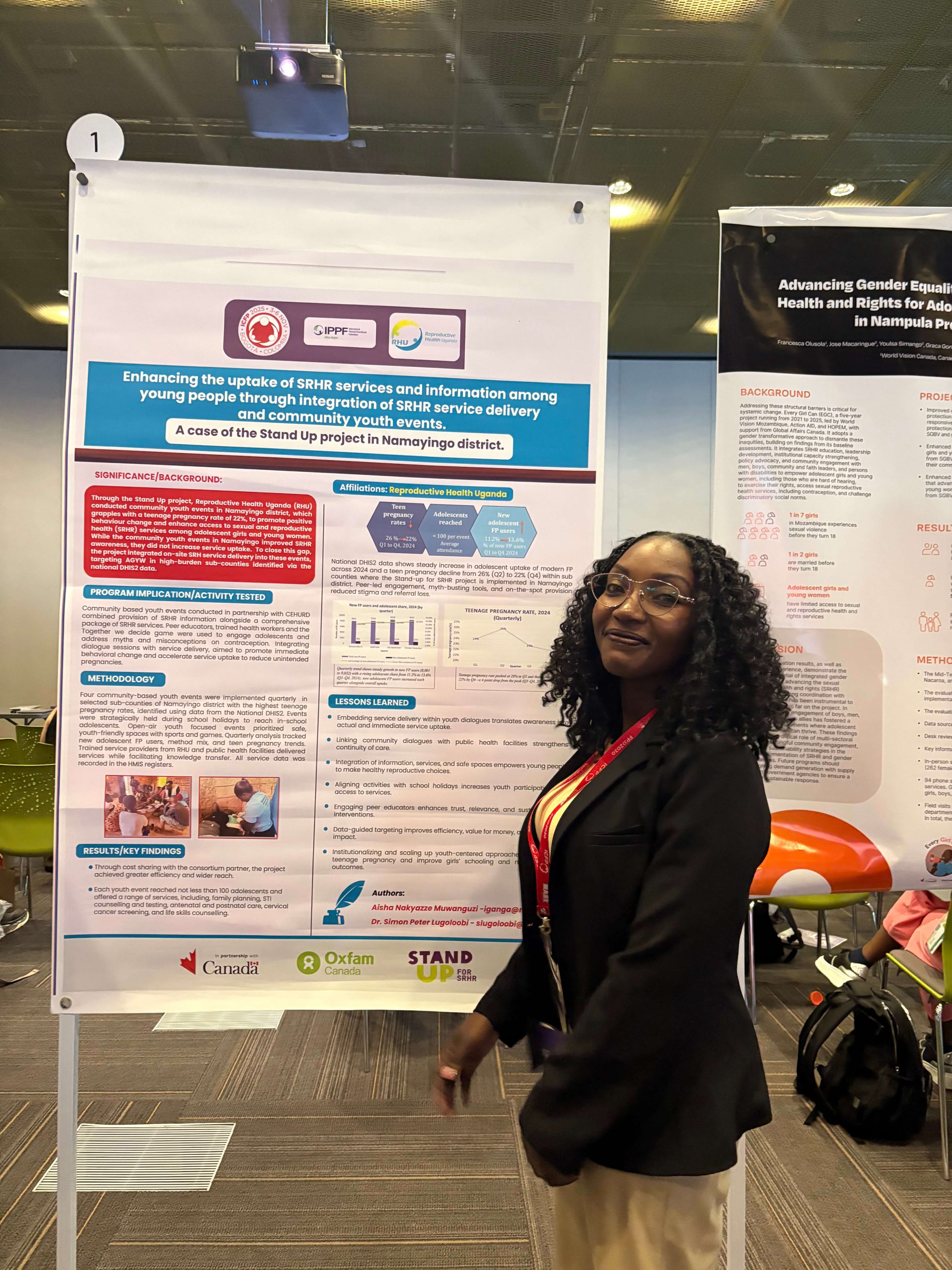
Aisha Muwyungazi from Reproductive Health Uganda (RHU) shared how integrating community youth events and SRH services has increased uptake. By combining youth event days with soccer and interactive games with services such as contraception, STI counselling and testing, antenatal and postnatal care, and cervical cancer screening, RHU has created safe and welcoming entry points for young people.
Oxfam Remains Committed to Protecting SRHR
Through the continued work of the Stand Up for SRHR project and the launch of the new CHOICE project in Malawi, Zambia, and Zimbabwe, Oxfam will continue to push back against backlash, invest in communities and health systems, and champion a rights-based and comprehensive approach to promoting SRHR.
Progress is Possible, Solutions Exist, Invest in SRHR
The message from ICFP was clear: progress is possible and solutions exist. When people have access to contraception, they have control over their lives.
At a moment of intensifying backlash and shrinking funding, support for SRHR is more urgent than ever. Governments and institutional donors must restore and adequately fund SRHR and resist coordinated attacks on bodily autonomy. Oxfam remains committed to advancing access to contraception as a human right – and to saving lives.
To support projects and activities that advance SRHR, donate below.
Discover more stories
On International Safe Abortion Day, we celebrate an important truth: rights only matter when people can exercise them. Around the world, progress has been made to advance sexual and reproductive health and rights (SRHR). Laws have changed, policies have evolved, and investments have expanded access to essential services. Yet for many women, girls and gender-diverse people, stigma, discrimination, lack of information, and under-resourced health systems continue to stand between rights on paper and reality.
Decisions about the future of Gaza must be made by Palestinians, with respect for basic human rights and self-determination.