Women's Economic Justice
When women have decent quality work, labour rights and earn a fair living, they can escape poverty and build prosperity

Around the world, women perform the worst work, earn less than men, do more unpaid work and bear the brunt of the widening wealth gap.
In many countries, husbands have the right to stop their wives from taking jobs, which isolates them and prevents economic independence. Caring for the family and home has long been the responsibility of women. This unpaid work means women and girls have less time to attend school, participate in their communities and politics, perform paid work and care for themselves.
When a woman is paid a fair and living wage and works in safe and decent working conditions, she has the power to lift herself out of poverty. This benefits her family and her community, too.
To create a more just society, we must prioritize the poor instead of the rich and powerful. We must build an economy that works for women.
What is Oxfam Doing?
We advocate for Canada to become a global leader in transformative programming for women’s economic empowerment. Together with partners around the world, we develop skills and technical training programs, and we advocate for fair wages and decent working condition to help achieve economic justice.
Challenge
Oxfam and our partners challenge traditional ideas of gender roles, which contribute to economic inequality. We engage community, educational and religious leaders to get their buy-in from the start.
Amplify
We work to amplify the voices of women and girls throughout society: in labour and feminist movements, in business, in political participation and in local, state/provincial and national leadership forums.
Pressure
We pressure governments to make all work paid equal and fair for women. We urge them to recognize and redistribute unpaid care work in Canada and globally through changes in policy and legislation.
IMPACT IN ACTION
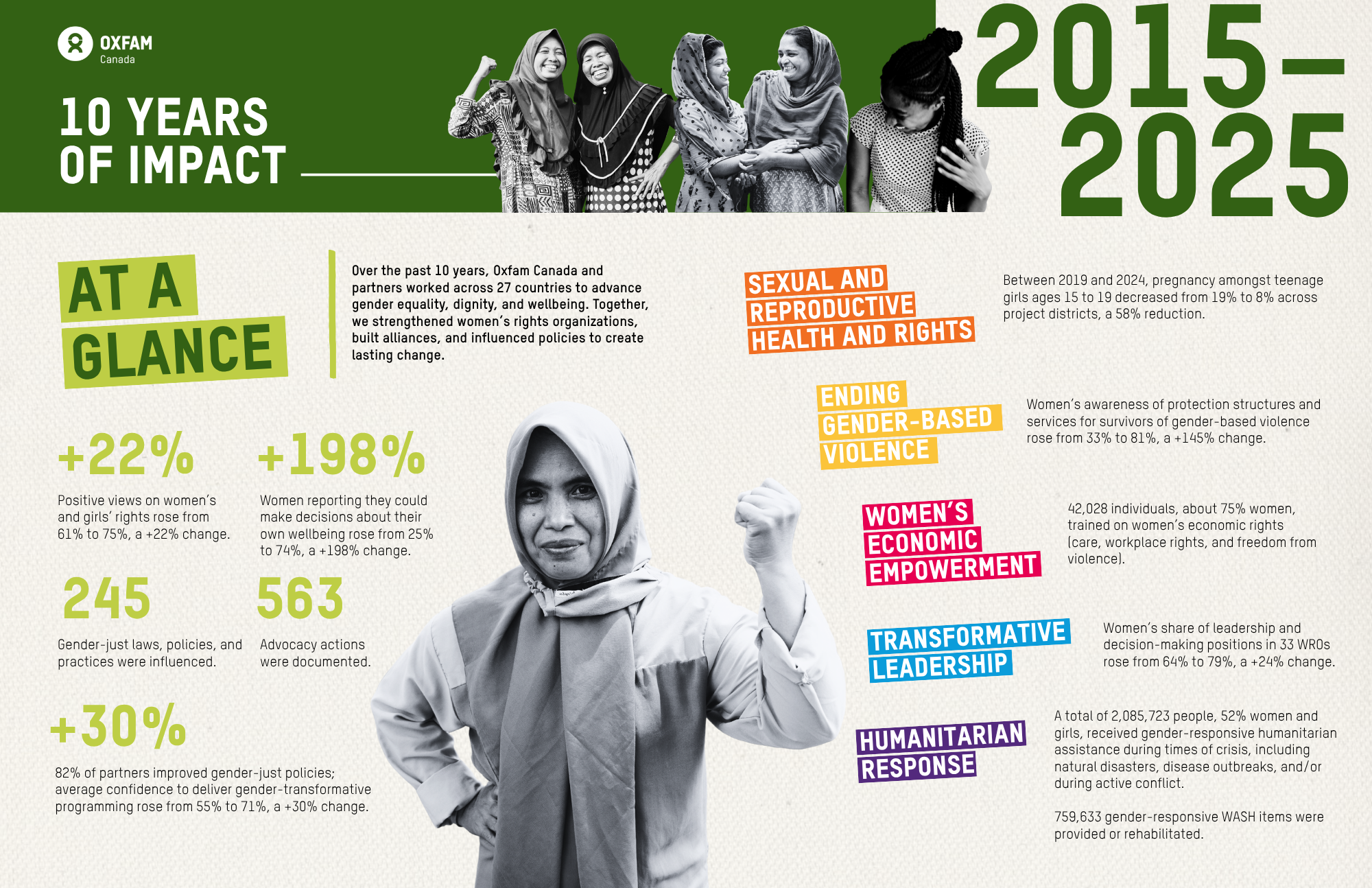
Between 2015 and 2025, 42,028 individuals (about 75% women) trained on women’s economic rights (care, workplace rights, freedom from violence)
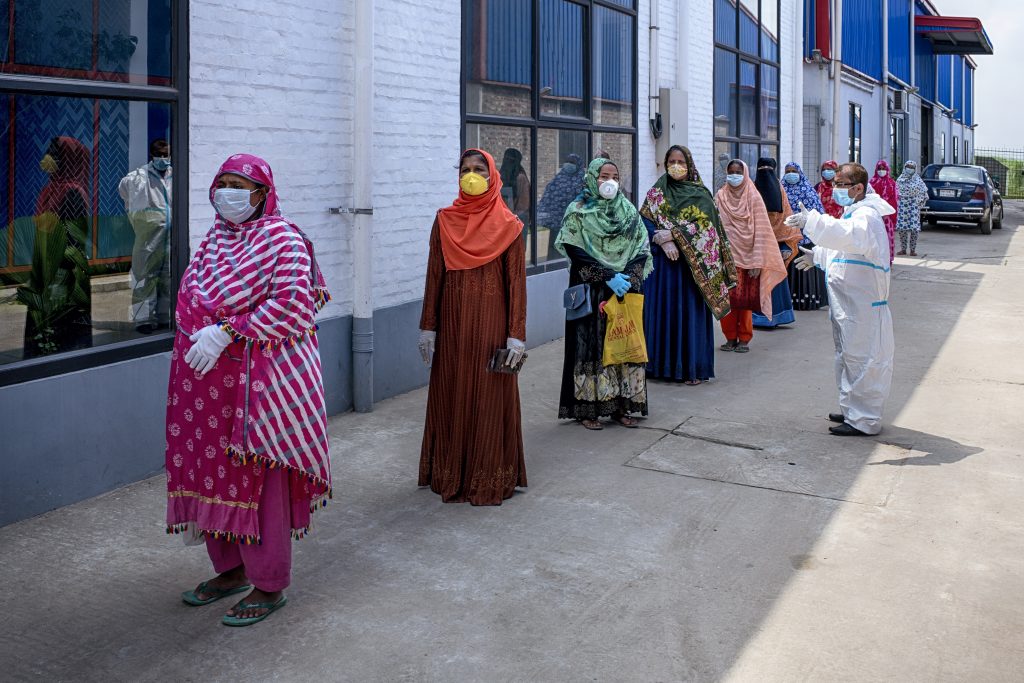
In Bangladesh, Oxfam and partners advanced decent work and economic rights for women domestic workers and women without formal sources of income by pairing skills and legal‑rights training with economic empowerment and advocacy.
Shahida’s story illustrates economic empowerment as a pathway to equality, she started a fabric business, expanded during COVID-19, and inspired other women and girls to pursue entrepreneurship. “Women must participate in economic activities to achieve fair rights and power in the family, society and state,” Shahida reflects.
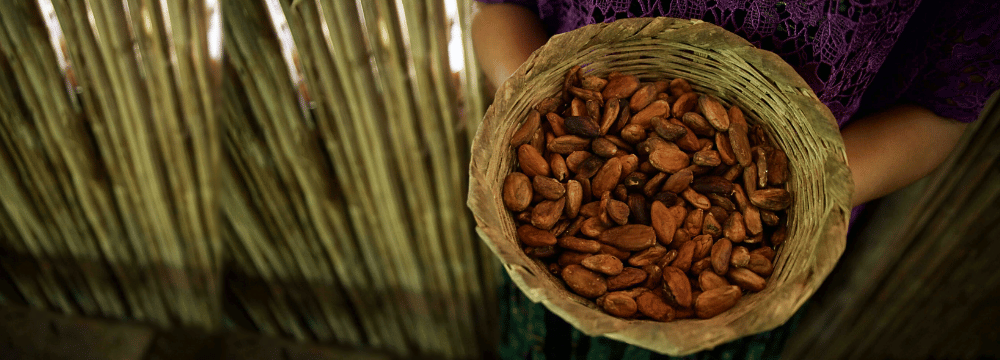
In Guatemala, women and youth in Alta Verapaz built green, small-scale enterprises, from coffee to climate‑resilient crops, backed by training, seed capital, and gender‑just business practices. The shift increased women’s income, confidence, and leadership in local markets and producer groups.
Related Stories and Features
Setzi's agricultural drying centre is a game changer for the community's small-scale farmers, as it harnesses energy-efficient technology to overcome climate challenges.
As the world grapples with the economic fallout from COVID-19, women domestic workers are experiencing an even further slide into poverty.
Three Steps You Can Take Now