Ending Violence
Against Women and Girls
Women aren't free until they're all free from violence

Violence against women and girls is a major cause of death, poor health and disability around the world. It also stops women and girls from escaping poverty. It limits their control over their own bodies. It holds them back from school, from work, from community life.
In many countries, women and girls can't access justice. They may not know they have the right to live free of violence. Violence and early or forced marriage are accepted ways of life, and men hold power over women.
Every woman should be able to live free from violence, regardless of her age, race, social or economic status. Today, that right is rarely within grasp for a woman living in poverty.
What is Oxfam Doing?
We are supporting organizations who are working to change the social norms and cultural practices that give men power over women, while also empowering women to prevent and overcome violence in their lives. We work with everyone in communities - women, men, authorities, teachers, religious leaders - to build a safe and just world where women and girls are in control of their lives and live free from violence.
Improve
social services, medical assistance, counselling, job and skills training, and legal aid.
Strengthen
leadership, engagement and rights among women and girls, while also involving men and boys.
Change
how people, families, communities and institutions think about violence.
Impact In Action
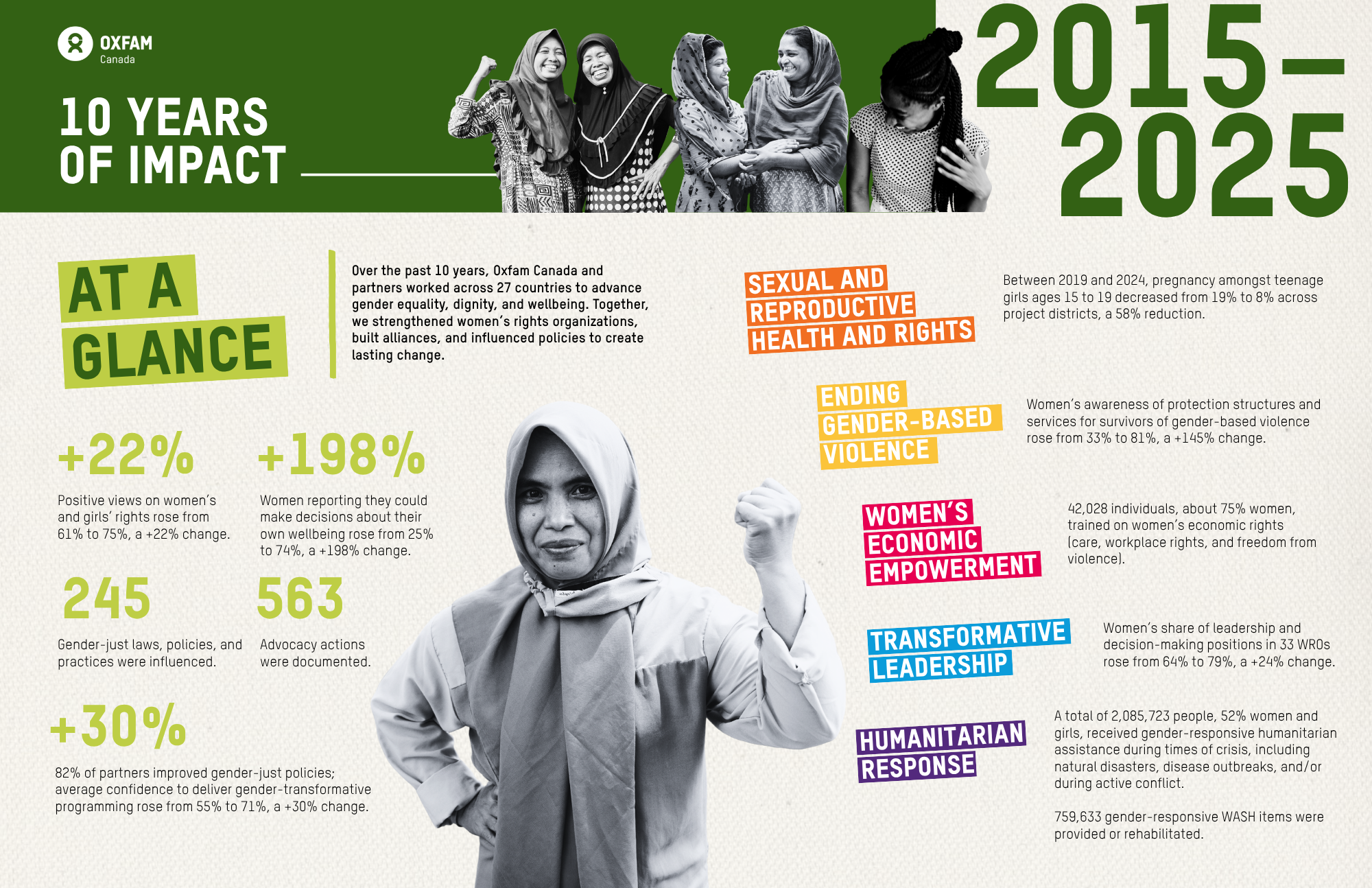
Between 2015 and 2025, women’s awareness of protection structures and services for survivors of violence rose from 33% to 81% (a +145% relative change)
In Pakistan, developing region-specific service provider directories helped survivors gain awareness and access to local services.
Similarly, in Bangladesh, partners facilitated linkages between survivors and health and legal services, while in India, two Women’s Support Centres were started in underserved areas, reaching 1,082 survivors with critical information, counselling, referrals, medical and legal services, and economic supports.
In Bangladesh, advocacy efforts led the Ministry of Law and the Supreme Court to reopen virtual courts so cases involving women and children could continue during pandemic lockdowns. At the local level, eight Union Council members publicly committed to ending child, early and forced marriage (CEFM) and took concrete steps to reduce gender-based violence (GBV). Farida Yasmin, a local sub-district leader, stopped 59 child marriages in her region.
Related Stories and Features
For more than two decades, the Violence Prevention Alliance (VPA) has worked to address the root causes of violence in Jamaica through community-based prevention programs grounded in evidence. Earlier this year, during International Development Week, we spoke with Colleen Wint Bond, a consultant and project coordinator with VPA, about the organization’s work and the growing challenges facing community organizations amid global aid cuts.
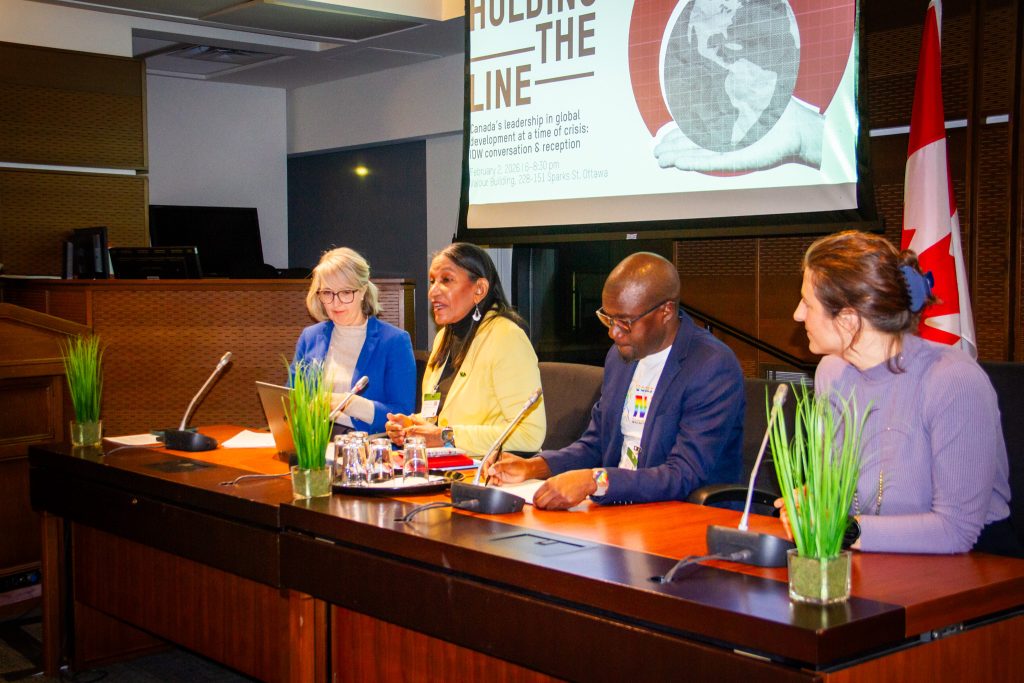
In Canada, we observe the 16 Days of Activism against Gender-Based Violence, a global movement that calls on everyone to reflect on GBV’s pervasive nature and our shared responsibility to create safer, more equitable spaces.
Three Steps You Can Take Now