From droughts to floods: Stories of resilience from Mozambique
From droughts to floods: Stories of resilience from Mozambique
For many communities in southern Mozambique, climate crises are compounding, swinging between extremes. One season, the rains never come, crops fail, water sources dry up, and families have no way to eat or earn their livelihood; the next, the rain comes too fast, flooding homes and forcing families to flee.
Across Gaza province, these climate shocks are becoming more frequent and more intense. But communities are finding ways to adapt and rebuild.
Joaquim’s story
For Joaquim, the recent drought caused by El Nino in Chicualacuala shaped every part of daily life. As a 46 year old father and the head of his household, he carried the responsibility of providing for his family every day. But as the drought stretched on, this became harder and harder to do. There were days when there just wasn’t enough food, and no way to change that.
“Before, our life was very difficult,” he recalls.
But with the support of Oxfam and local partners, Joaquim’s family began receiving food assistance, and for the first time in months, there was enough to eat. But more than just having enough to eat, the support meant a shift from constant worry to renewed confidence.
“With the support of the project, we have been able to move forward with our dreams and improve the quality of life of our family. We can feed our family and even save for our children’s education. We are very grateful.”
Laurciana’s story
In other parts of Gaza province in Mozambique, families are facing a different climate crisis.
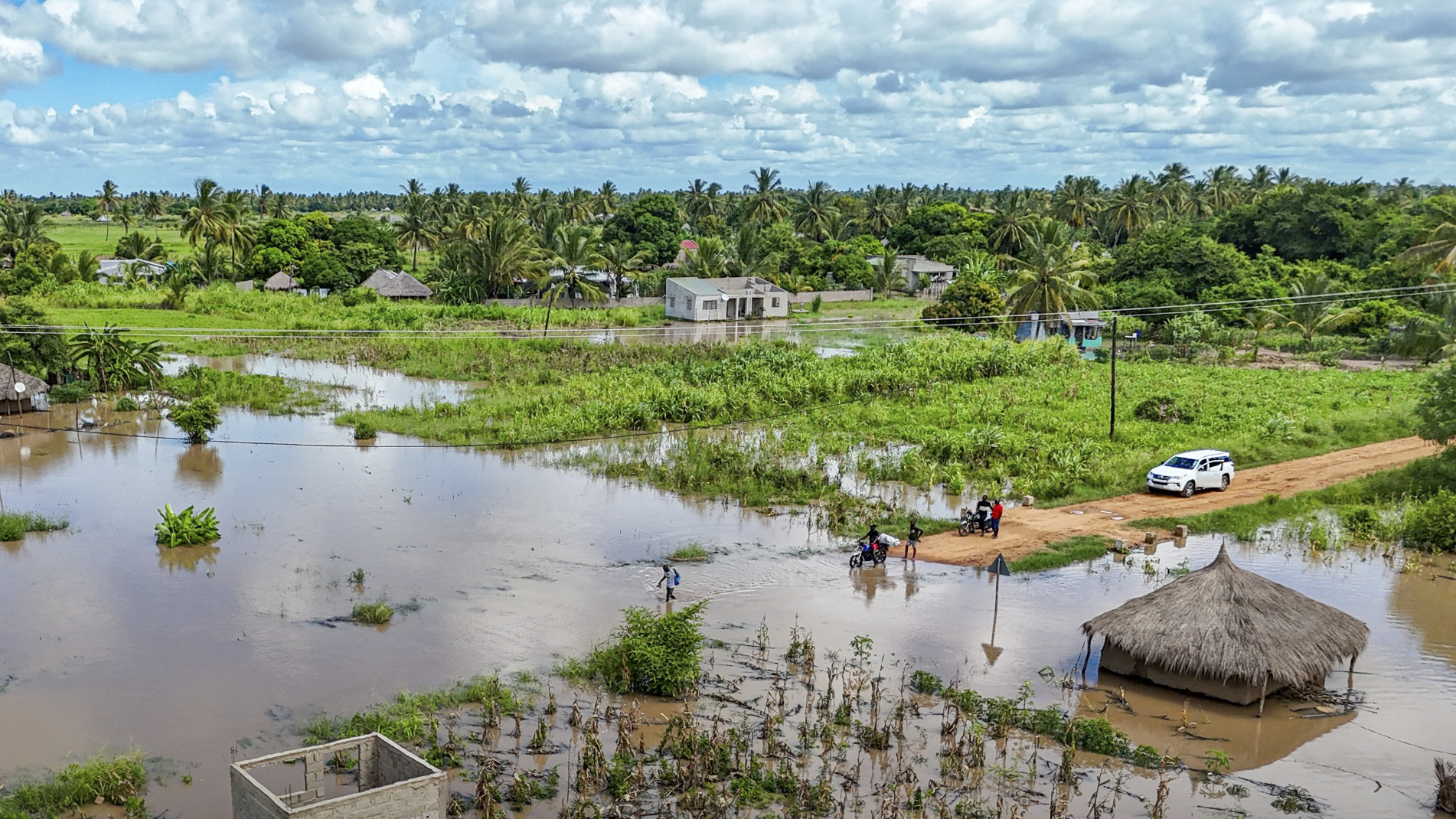
When the floods began in January, Laurciana and her family were told to leave immediately. The rain had been building for days, and the water kept rising, faster and faster. They were forced to leave their home with almost no time to prepare, and soon after, many houses in their community collapsed due to the force of the floodwater.
“We lost our homes. We lost everything,” Laurciana says.
Emergency support has helped her family get through the first days, providing food to eat. But the future remains uncertain, and without shelter or crops, rebuilding will take time.
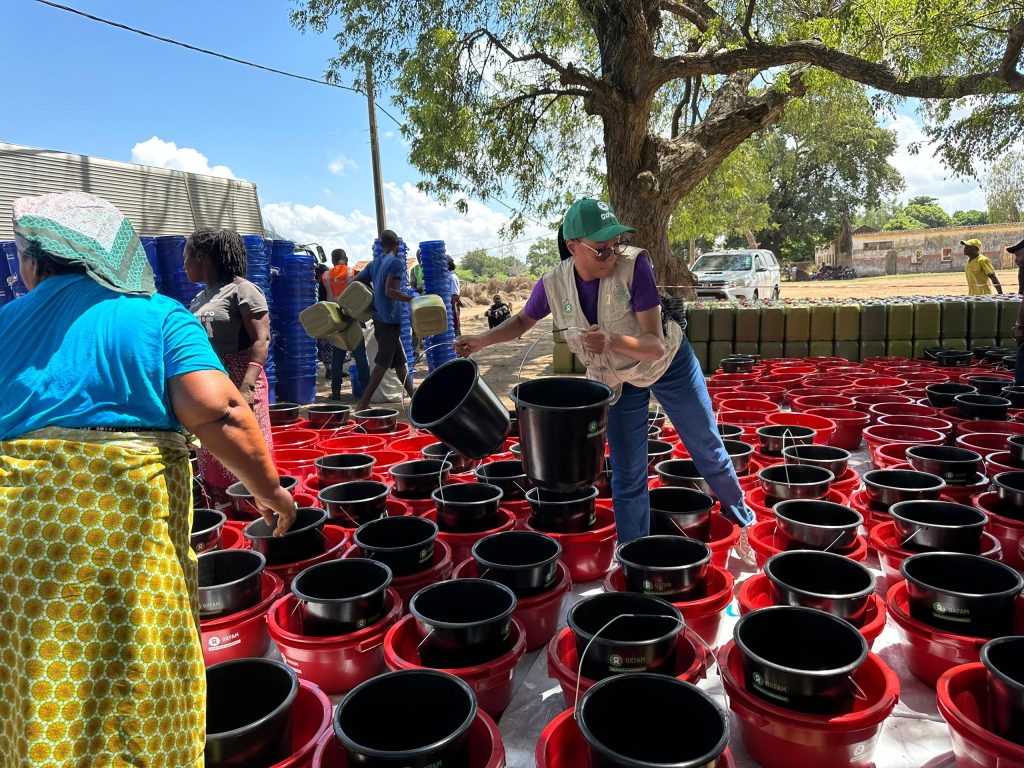
Preparing the WASH kits and non-food items that will be distributed to the households impacted by the recent floods. Photo: Aderito Dzimba/Oxfam
“At least we escaped with our lives,” Laurciana tells us. “But when we return, we don’t know how we will live. Most of our homes fell after we left."
Even so, Laurciana is focused on rebuilding. “We want to work. We want to rebuild,” she says.
Amina’s story
Stories like these are not new for many communities in Gaza province. Amina remembers experiencing floods as a teenager more than two decades ago, and at the time, support from Oxfam helped her community access clean water through simple items like buckets, water containers, and guidance on how to build safe sanitation systems.
Years later, many of those same items are still in use. “Some families in our community still use the blue 10-litre Oxfam buckets today,” she says. “We also continue to use the manual water sources built by Oxfam; they are still serving us until now.”
Amina’s story is a reminder that even small interventions can last and continue to support communities long after the crisis has passed.
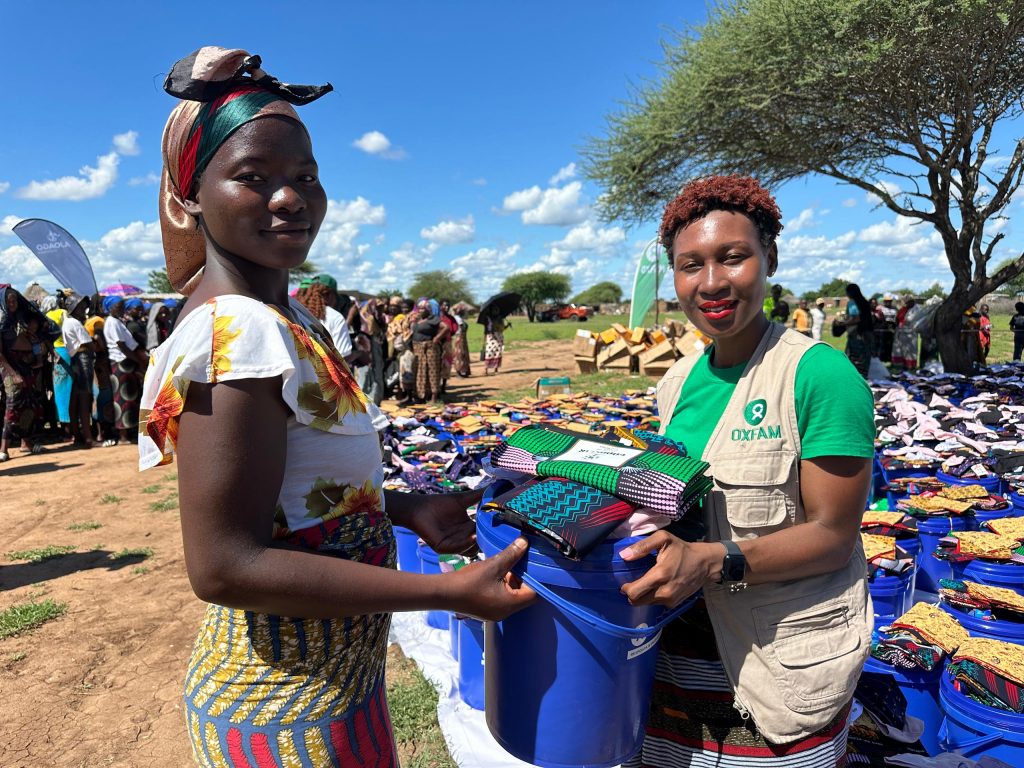
Distribution of dignity kits by Oxfam and partners. Photo: Aderito Dzimba/Oxfam
Across these stories, one thing is clear. The right support at the right time can make a real difference. In Chicualacuala, it has meant families being able to eat again. In flood-affected communities, it has meant immediate relief in a moment of crisis. And over time, even the simplest support can shape daily life, even years later.
But for many, the hardest part is still ahead, and the work is far from over. Families like Laurciana’s still need safe shelter and support to start their livelihoods. They are ready to rebuild, but they need the tools to do it.
With continued support, communities across Mozambique are working to adapt, recover, and move forward. And in places like Gaza Province, where climate crises are quickly compounding, one after another, that support matters now more than ever.
Discover more stories
On International Safe Abortion Day, we celebrate an important truth: rights only matter when people can exercise them. Around the world, progress has been made to advance sexual and reproductive health and rights (SRHR). Laws have changed, policies have evolved, and investments have expanded access to essential services. Yet for many women, girls and gender-diverse people, stigma, discrimination, lack of information, and under-resourced health systems continue to stand between rights on paper and reality.
Decisions about the future of Gaza must be made by Palestinians, with respect for basic human rights and self-determination.