Reflections from Copenhagen: Why Investing in Women’s Rights Matters for Canada’s Future
Reflections from Copenhagen: Why Investing in Women’s Rights Matters for Canada’s Future
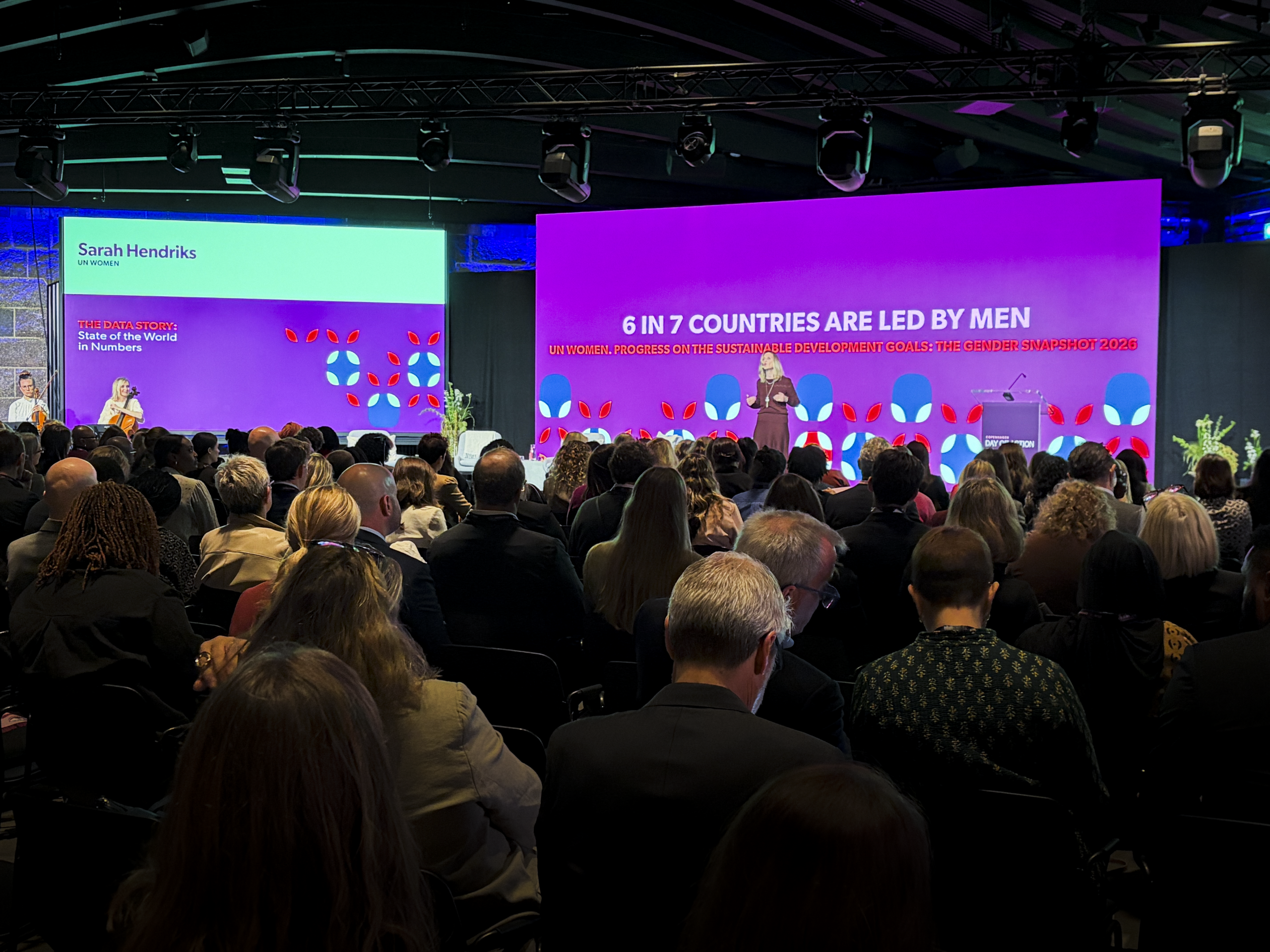
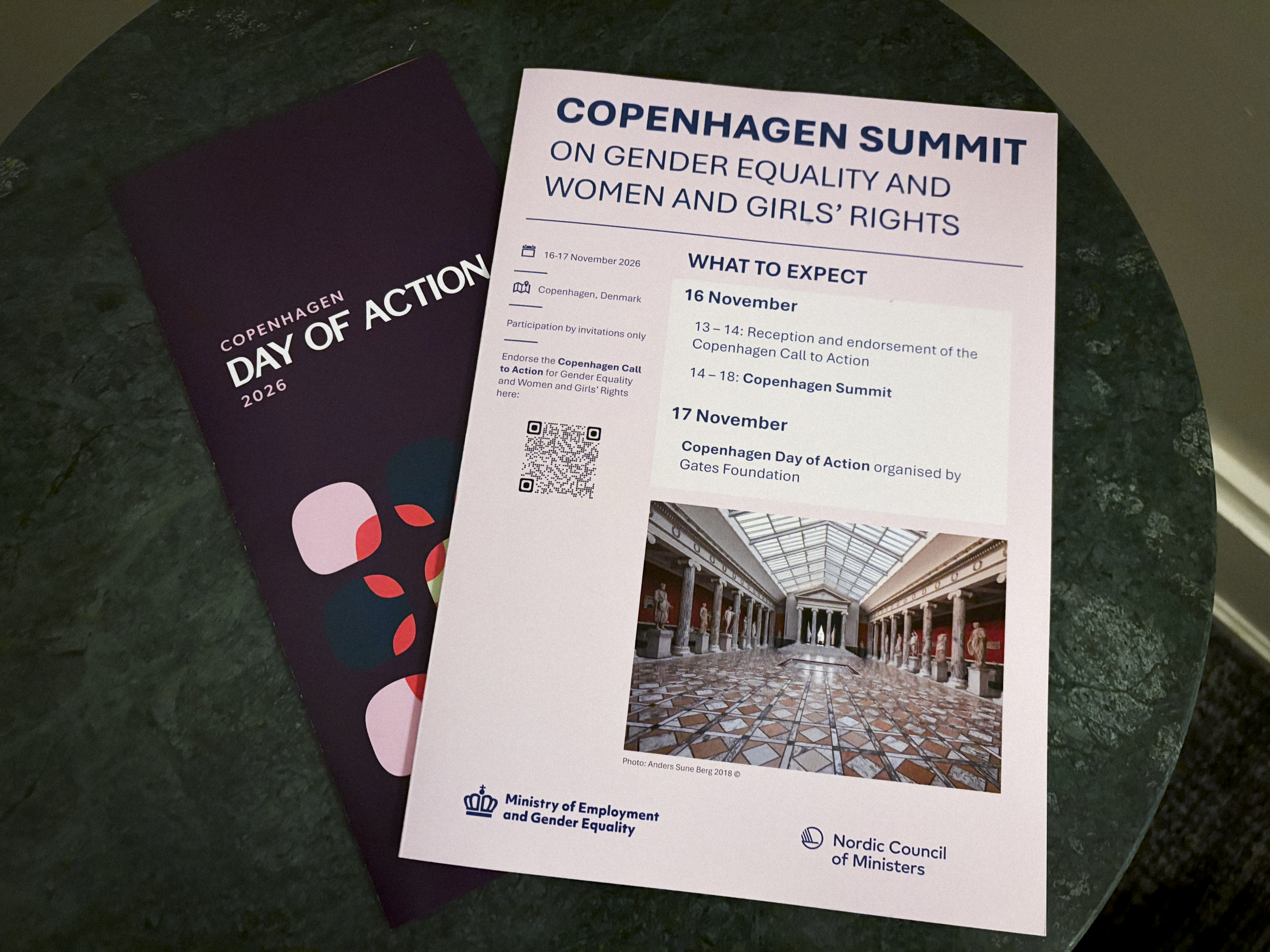
This month, Oxfam Canada attended the Copenhagen Summit for Women’s and Girls’ Rights hosted by the Nordic Council, bringing together hundreds of government officials, gender justice advocates, representatives from multilateral organizations, philanthropists and private sector representatives. The summit couldn’t have come at a better time: around the world, we see important women’s rights gains rolled back, funding for women’s rights organizations cut, and the anti-rights movement growing in size and influence. We were all there determined that only by working together we can stem the fallout of this backlash.
There were no Canadian minsters in the room, and it was noticed. In fact, several attendants came up to me wondering what happened to the Canadian government. Canada had been a champion for gender equality for years, and now seems to be noticeably absent in key gender equality spaces. On top, it cut its international assistance by $2.7B in Budget 2025 noting in particular global health as an area facing reductions.
For Oxfam Canada, this has been a serious concern ever since. With Canada being the biggest donor for Oxfam’s sexual and reproductive health and rights projects, we have seen what this investment can achieve.
Here is just one example of how this work has transformed women’s and girls’ lives.
In Zambia, a young girl named Mutinta dropped out of school and married while still in Grade 8, hoping to ease her family's financial struggles. Through Oxfam's SRHR programming, a peer educator helped her understand her rights and the choices available to her. She eventually returned to school and is now training to become a peer educator herself, helping other girls shape their futures.
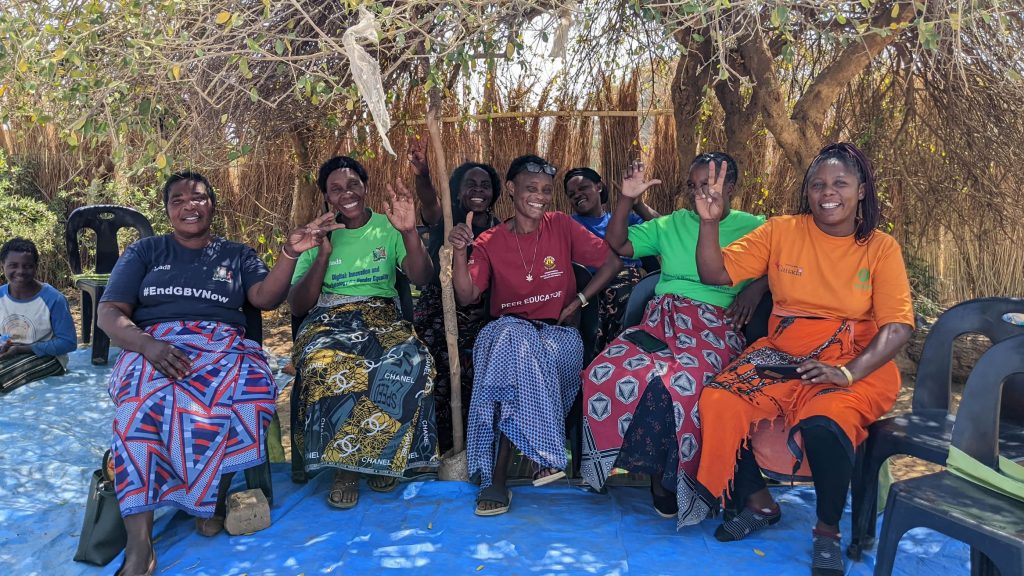
Marriage counsellors in Liteta, Zambia. Photo: Alexandra Wilson / Oxfam
Her story is part of a much bigger picture. Across the communities where we work, we've seen teenage pregnancy rates fall from 19% to 8%, and significant improvements in access to contraception. But these are not just health outcomes. They are the foundations of women's economic empowerment. When women can decide whether and when to have children, they have greater opportunities to finish school, pursue decent work, earn an income and build economic independence.
And the impact goes even further. When women gain control over their bodies and lives, they gain the power to shape their communities and societies. We've seen this in Malawi, where women's rights organizations supported through our programming successfully advocated for increased government funding for reproductive health services. That's women exercising leadership, influencing public policy and holding governments accountable. That's civil society in action—and it's precisely the kind of civic participation that makes democracies stronger.
At a time when women's rights and democratic freedoms are increasingly under attack, investments in SRHR matter more than ever. They are directly relevant to Canada's ambition to build stronger, mutually beneficial economic relationships around the world. Because stronger democracies, with more accountable institutions, vibrant civil societies and greater participation by women, create the conditions for more inclusive economies and sustainable trade partnerships.
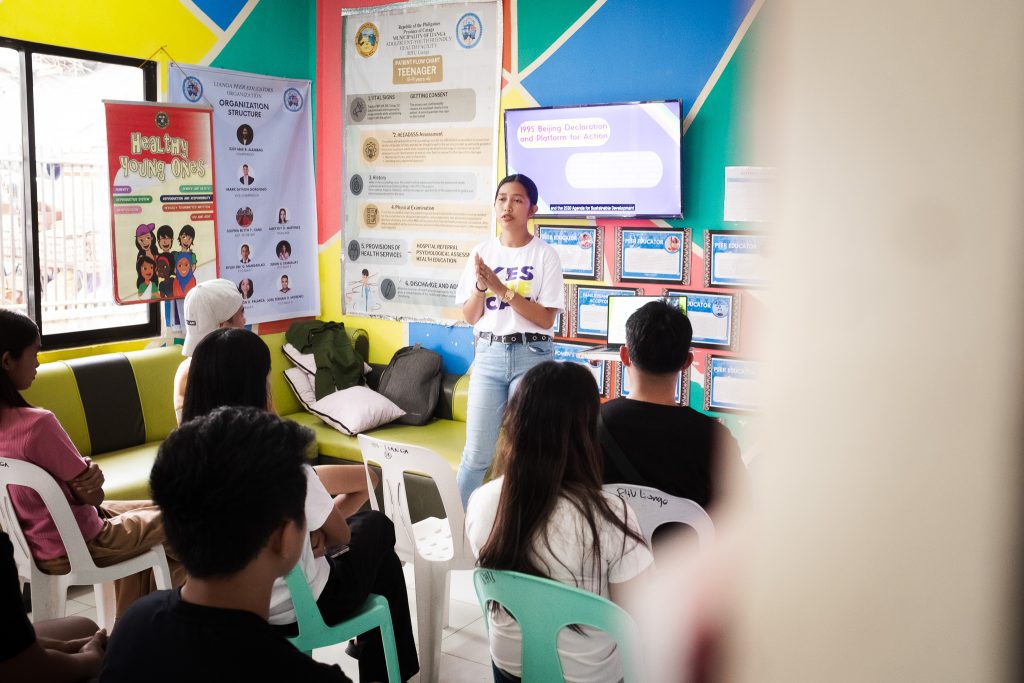
A peer educator talking to a group of young people about sexual and reproductive health in the Philippines. Photo: Caroline Leal / Oxfam
There is a powerful connection here: investing in SRHR strengthens women's agency and that agency enables greater economic participation and leadership. Women's leadership strengthens civil society and democratic accountability. And stronger, more inclusive societies are better positioned to become resilient and reliable economic partners for Canada.
These are not competing priorities. They reinforce one another.
If Canada wants to build lasting economic partnerships based on mutual prosperity, it must also invest in the rights, leadership and democratic institutions that make those partnerships possible, and that starts with sustained investments in SRHR and the grassroots women's rights organizations driving change.
This has been our message to the Canadian government, and we hope to see this important connection from SRHR enabling women’s leadership, civic action and democracy reflected in the foreign policy coming out later this year.
Diana Sarosi is the Director of Policy, Campaigns and Communications at Oxfam Canada.
At a time when international aid is being cut, your support matters more than ever. Help Oxfam continue supporting communities around the world. Donate today.
Discover more stories
During a visit to northwestern Uganda, Oxfam Canada's Content and Creative Specialist met refugee students eager to share their stories, dreams, and the way they're making a difference in their communities. This World Children's Day, read more about how these young learners are challenging gender norms, supporting one another, and imagining their own futures.
Communities across Guatemala’s Dry Corridor are strengthening local leadership and early warning systems to improve food security, protect their families, and prepare for the future.