Marking one year of the so called “ceasefire” in Gaza and the latest updates from Palestine
Marking one year of the so called “ceasefire” in Gaza and the latest updates from Palestine
October 10 marked one year since a so called “ceasefire” was implemented in Gaza. Today, the genocide against Palestinians in Gaza continues and the humanitarian situation across all of Palestine remains urgent – including in the West Bank and East Jerusalem.
The entirety of the Oxfam confederation remains mobilized to respond – providing essential humanitarian aid and working to build political support to advance humanitarian access, Palestinian self-determination in the reconstruction of Gaza, and to ban commercial activity with illegal Israeli settlements in accordance with international law.
Here we provide a brief snapshot of the latest updates across three areas:
- the current humanitarian context,
- empowering a Palestinian-led reconstruction of Gaza, and
- how states are attempting to uphold international law by implementing bans on commercial activities with illegal Israeli settlements in occupied Palestinian territory.
Despite a “ceasefire” the humanitarian crisis remains
Despite a “ceasefire” being in place since October 10, 2025, the humanitarian situation in Gaza remains dire.
The Israeli military’s daily attacks put civilians at constant risk – in just the last year more than 1,500 Palestinians have been killed by Israeli forces and more than 5,400 injured. In late August, Israeli airstrikes destroyed a well and desalination facility in Deir Al Balah, disrupting safe water access for more than 4,000 people and on the same day, an Israeli airstrike destroyed a warehouse containing USD 770,000 in nutritional supplies for children and pregnant women.
With more than 90 percent of the population displaced, most civilians are living in tents or partially destroyed buildings. In September, a damaged six-story residential building collapsed in the Tal al Hawa area of Gaza city, killing 21 people and injuring dozens.
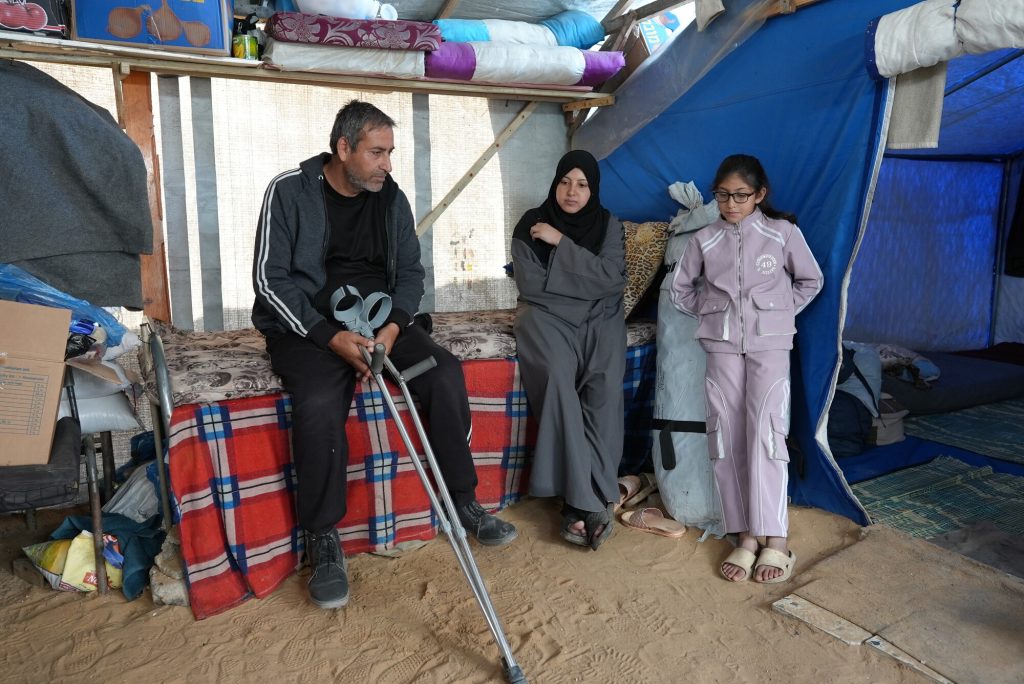
Nabil sits next to his wife and daughter in a makeshift tent camp in Gaza City. After losing his leg in the war, even the most basic daily task became a struggle. Photo: Hassona Aljerjawie / Alef Multimedia / Oxfam
During September’s United Nations General Assembly meetings, Canada committed an additional $80 million in humanitarian aid to Palestine, however, humanitarian operations continue to be constrained by physical and bureaucratic impediments. For example, Israel restricts on the entry of essential supplies, equipment, fuel, construction materials, and transitional shelter items. These policies have sustained chronic hunger Gaza and prevented any rebuilding with new materials to take place over the past year of a “ceasefire.” Restrictions on the entry of goods are particularly significant ahead of the winter season. At the current rate of entry, many critical shelter and winterization materials are unlikely to arrive in time for an effective winter response.
The coming rainy season is expected to be made worse by El Niño – heavy rains and flooding will have severe consequences, including on those who are currently displaced and living in tents or damaged structures. Flooding will impact already strained water, sanitation, and hygiene systems.
At least 11 children died from hypothermia last winter, including infants, underscoring the urgency of winter preparedness.
Palestinian self-determination and the reconstruction of Gaza
In July, Oxfam, alongside the Palestine Trade Center, and the Palestine Economic Policy and Research Institute released a report, Building the Gaza Strip Anew, with recommendations for reconstruction and the role of the Palestinian people in key decisions about the future of Gaza.
The report sets out a viable path by supporting Palestinians to restore family life, communities, institutions, livelihoods and histories, anchored in their inalienable right to self-determination. The conclusions, drawn from years of Palestinian and international agency experience in responding to war, blockade and deprivation in Palestine, are straightforward: any credible recovery framework must be Palestinian-owned, rights-based, reparations-oriented, accountable and anchored in an approach that links Gaza’s recovery to the unity of the rest of the occupied Palestinian territory, including the West Bank and East Jerusalem.
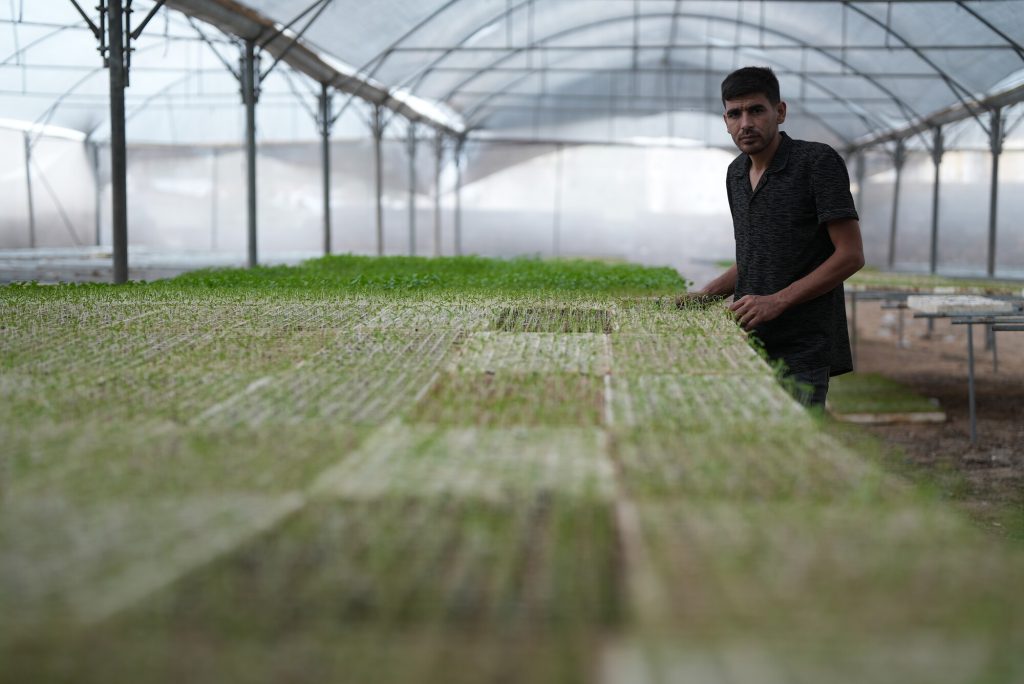
When the war destroyed Ahmad’s 45 dunams of thriving nurseries and forced him into displacement, he was left with nothing. But with determination and support, he began again, rebuilding from half a dunam of land. Despite danger, exhaustion, and the constant threat of loss, Ahmad continues to grow life from the rubble, feeding communities and holding onto hope that peace will allow his gardens to flourish once more. Photo: Alef Multimedia / Oxfam
In September, Oxfam Canada’s Shireen Salti and Dalia Al-Awqati hosted a webinar alongside report author Raja Khalidi of the Palestine Economic Policy Research Institute to discuss the report’s recommendations in detail. You can watch a recording of the webinar here.
Ahead of the next federal budget, Oxfam Canada is calling on our government to commit funding to the reconstruction of Gaza – estimated to cost USD 71.4 billion – and ensure that reconstruction is Palestinian-led, owned, and anchored in self-determination. Click here to send a letter to your MP supporting this call.
Banning trade with illegal Israeli settlements
Canada has been clear that illegal Israeli settlements in the occupied Palestinian territory and occupied Syrian Golan violate international law, but until recently little action has been taken in response. Over the last months there’s been a cascade of commitments made by states across Europe in an effort to discourage Israel’s active illegal annexation of Palestinian territory.
Oxfam Canada is encouraging the Canadian government to go beyond an import ban and include services, investments, procurement, and all commercial relationships linked to illegal settlements. At a time when settlement expansion, state-backed settler violence, and the forcible displacement of Palestinians are accelerating, Canada must, now more than ever, align its policies with international law and the government’s stated commitment to a just and lasting peace.
You can read our full statement on the government’s commitment here.
In early 2027, Oxfam Canada will release a report detailing the Canadian companies who are trading with, or investing in, companies in illegal Israeli settlements. You can sign up for updates on the report here, and to follow along on all our work related to Palestine.
Discover more stories
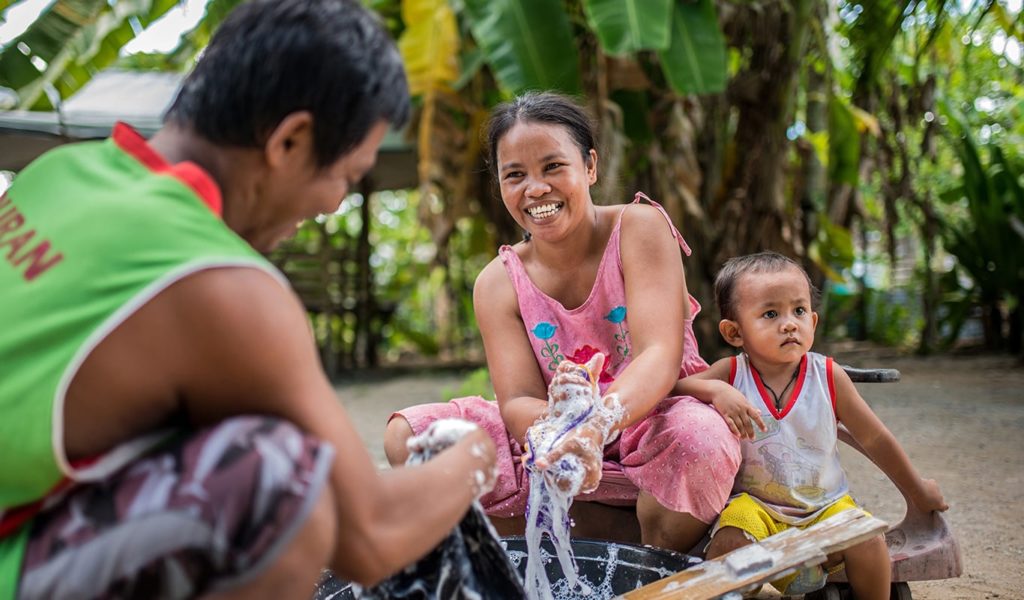
Around the world, millions of domestic workers, most of them women, are doing work that keeps our societies and economies running. Yet they remain among the least protected and most exploited workers. On October 29, the International Day of Care and Support, Oxfam released a new briefing paper, Time to Care for Care Workers: Ending the Domestic Workers' Exploitation, examining why the people doing this essential work continue to face exploitation and what needs to change.
The world is dangerously close to crossing 1.5oC above pre-industrial levels, despite global commitments to stay within the threshold to avoid the worst impacts of global warming.