The Ultra-Rich are Fueling Climate Disasters Like There’s No Tomorrow
The Ultra-Rich are Fueling Climate Disasters Like There’s No Tomorrow
The world is dangerously close to crossing 1.5°C above pre-industrial levels, despite global commitments to stay within the threshold to avoid the worst impacts of global warming. Yet the unchecked excessive emissions of the wealthiest are making it harder to meet this goal. Their private jets, luxury lifestyles, and investments in polluting industries contribute to excessive emissions and heating our planet at an alarming rate. Meanwhile, people who are least responsible for climate change are left to face its growing dangers.
Oxfam's new report Disaster Divide: How Climate Chaos Deepens Inequality and Enriches the Few exposes how the super-rich are responsible for a disproportionate share of carbon emissions while ordinary people bear the brunt of climate disasters. It also sets out what governments can do to tackle this growing crisis.
New Oxfam Report
Disaster Divide
How climate chaos deepens inequality and enriches the few.
The Disproportionate Carbon Emission
Not everyone is equally responsible for climate change. For ordinary people, emissions are tied to everyday needs like heating their homes, traveling to work, and putting food on the table. But many of their choices depend on the options available to them and are limited by government decisions on investment, infrastructure, and public services. For example, people cannot easily choose public transit if their communities lack reliable bus or train services.
For the ultra-rich, it is a different story. As people get richer, their wealth allows them to have carbon-intensive luxury lifestyles from private jets to luxury yachts and multiple homes. Oxfam's latest report reveals how deep this emissions inequality has become.
0.1%
The world's richest 0.1%, just 8 million people, emit more than the world's poorest 44%, who total 3.5 billion.
125x
Globally, a person from the richest 0.1% has contributed 125 times more than the average person to extreme heat events, almost 400 times more than someone from the poorest 50%.
50x
Canada's richest 0.1% emit 50 times more carbon per person than the poorest half of the population.
9 months
In just over 9 months, someone within Canada's wealthiest 0.1% emits more carbon than someone in the poorest half has emitted over the last 30 years.
Rich countries also bear the greatest responsibility for pollution. Between 1850 to 2015, countries of the Global North (14% of the world's population) were responsible for 92% of emissions. Despite progress in recent years, Canada's emissions increased by 12.6% between 1990 to 2024.
The Climate Cost of Private Jets
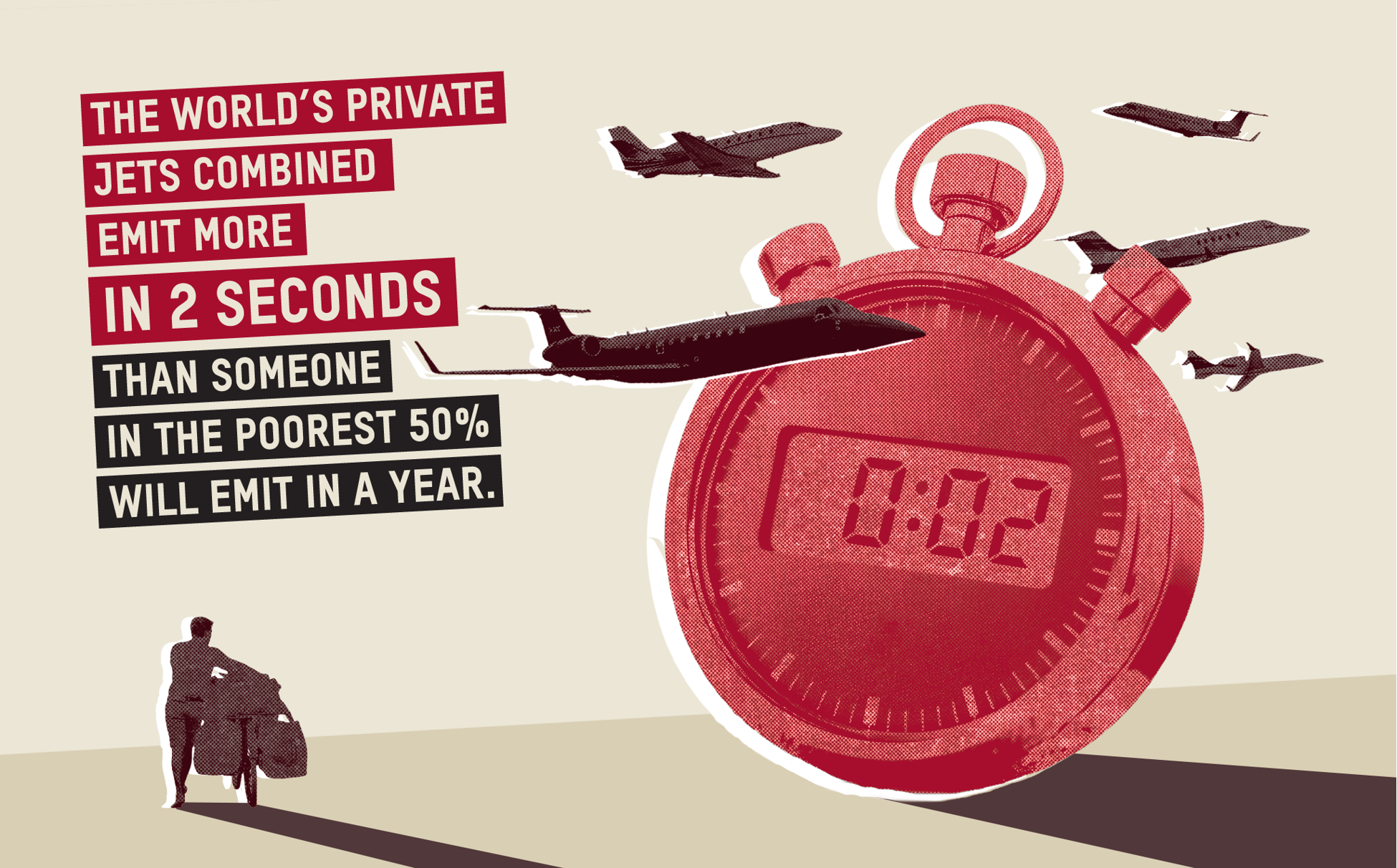
There is perhaps no better symbol of wasteful carbon emissions than travel by private jet. These jets are only used by the richest 0.003% of the world's population, around 250,000 people, predominantly men. Oxfam's 2025 analysis finds that:
16M
Private jets emitted 16 million tonnes of carbon; it would take 80 million trees to offset these emissions.
20 min
Canada's private jets combined emitted more carbon in 20 minutes than the average person in Canada will emit in an entire year.
71,239
Private jet flights departed Canada, emitting around 333,634 tonnes of carbon, almost three times the weight of Toronto's CN Tower. Offsetting those emissions would take around 1.7 million trees.
These emissions are not from meeting basic needs. They are tied to extreme wealth and luxury. And private jets are only a part of the story.
The Hidden Pollution Behind Billionaire Wealth
The ultra-rich do not only pollute through their extravagant lifestyle. They also contribute to emissions through their investments. Billionaires are more likely to invest in more polluting industries.
Oxfam's report identified the investment emissions of 1,000 billionaires and the companies they own, control, or invest in. The report reveals:
486M
The total ownership emissions of 1,000 billionaires amount to 486 million tonnes of carbon in 2025, equivalent to being the 19th most polluting country in the world.
4M
The ultra-rich top 100 billionaires have the most extreme carbon footprints averaging to 4 million tons of carbon emissions each.
75%
In Canada, 75% of our billionaires' investments are in high climate impact industries such as oil and gas.
40 min
In just over 40 minutes, a billionaire on average emits more carbon from their investments than the yearly total emitted by someone in the poorest half of Canada.
The ultra-rich are not only leaving behind an oversized carbon footprint. Their wealth and investments can help keep polluting industries growing.
The Human Cost of Excessive Emissions
The consequences of unchecked carbon pollution are dire. In 2023, over 178,000 people died globally due to heatwaves, of which 54% were due to human-induced climate change. Almost half of the world will be living with extreme heat by 2050 if the world reaches 2°C of global warming above pre-industrial levels. Oxfam's report finds that just one year's emissions from the ultra-rich 1% will result in approximately 1.9 million excess deaths related to heat.
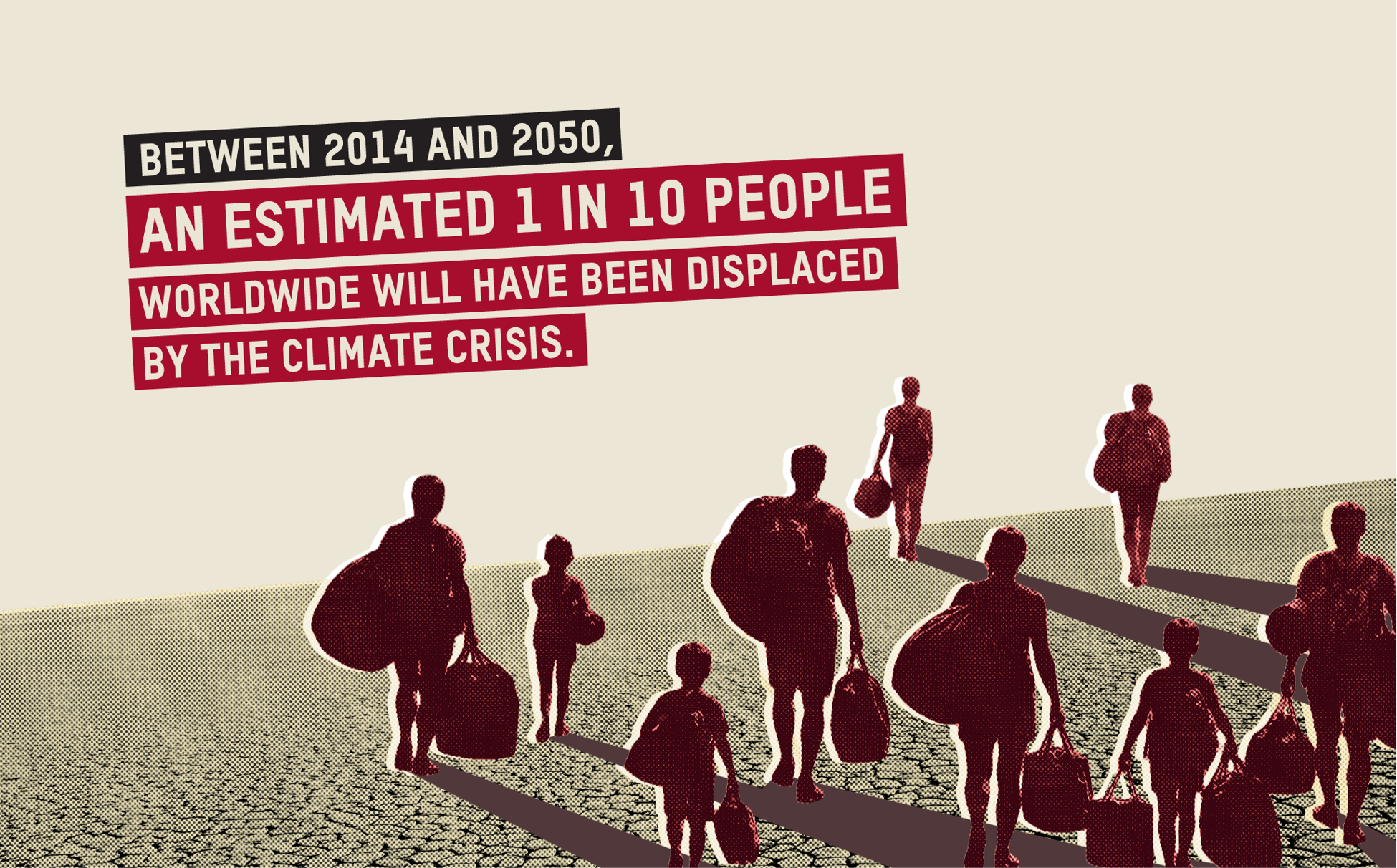
Canada is already experiencing the deadly consequences of excessive emissions through heatwaves, wildfires, floods. Between 2000-2020, more than 200 excess deaths were attributed to extreme heat events in Montreal and Toronto. According to the BC Coroner's Service, the 2021 heat dome in British Columbia resulted in 619 heat-related deaths. According to Elbows Up for Climate Campaign, more than 60% of Canadians have been affected by climate disasters this year. Between 2008 and 2025, 828,000 people in Canada were displaced by disasters including wildfires and floods. While people across Canada are already feeling the effects of climate change, the biggest polluters continue to produce far more than their fair share of emissions.
It's Time to Make the Ultra-Rich Polluters Pay
The emissions of the ultra-rich are pushing the world closer to climate collapse, leaving ordinary people to bear the greatest burden. Those who pollute the most must take the greatest responsibility for tackling the crisis.
Take action today and ask Canada to act now by making the ultra-rich polluters pay their fair share through taxing their luxury lifestyles and their polluting investments. It's time to make rich polluters pay.
Discover more stories
On International Safe Abortion Day, we celebrate an important truth: rights only matter when people can exercise them. Around the world, progress has been made to advance sexual and reproductive health and rights (SRHR). Laws have changed, policies have evolved, and investments have expanded access to essential services. Yet for many women, girls and gender-diverse people, stigma, discrimination, lack of information, and under-resourced health systems continue to stand between rights on paper and reality.

Decisions about the future of Gaza must be made by Palestinians, with respect for basic human rights and self-determination.