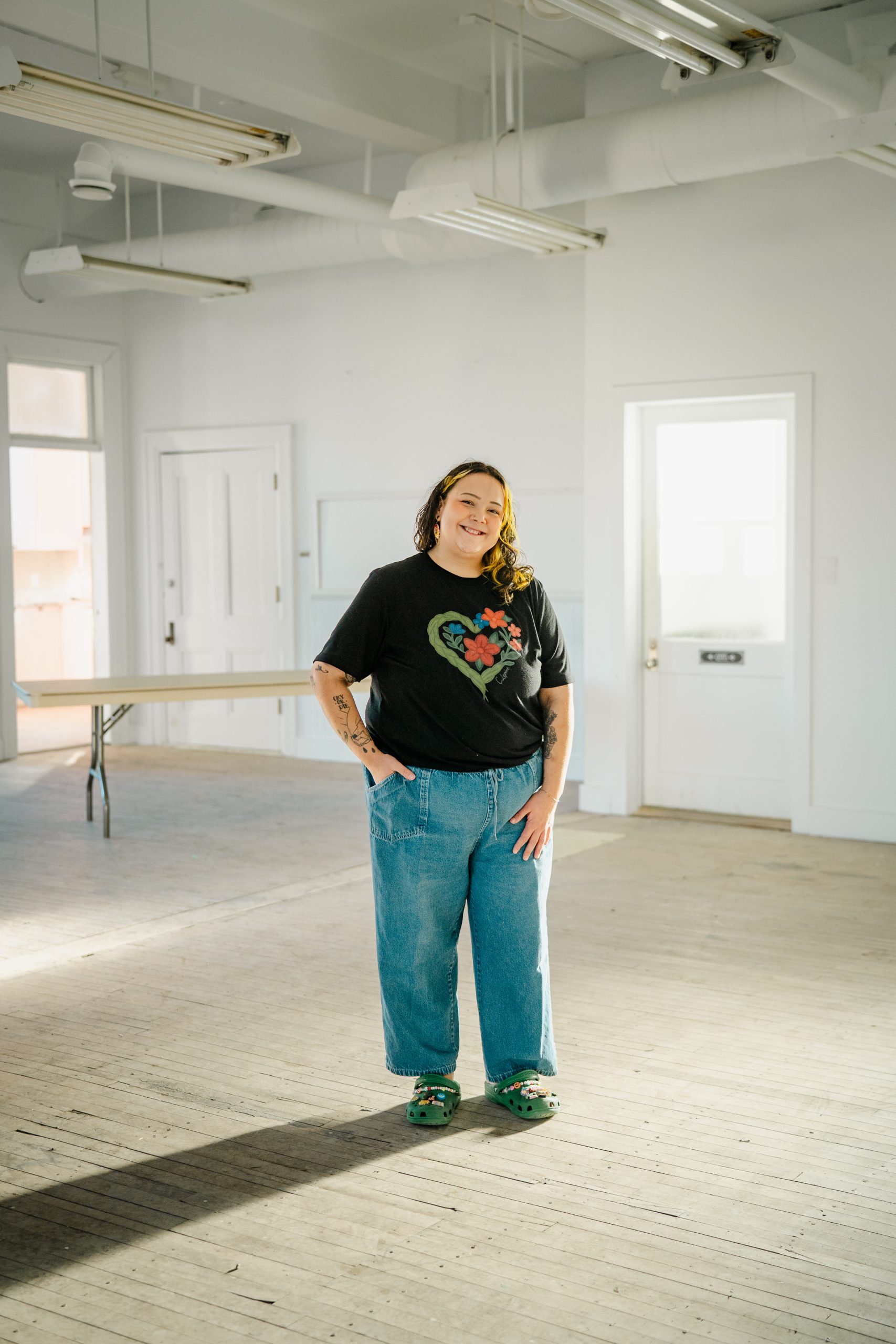
Community is medicine: Syndel Thomas Kozar and the art of representing your spirit
Community is medicine: Syndel Thomas Kozar and the art of representing your spirit
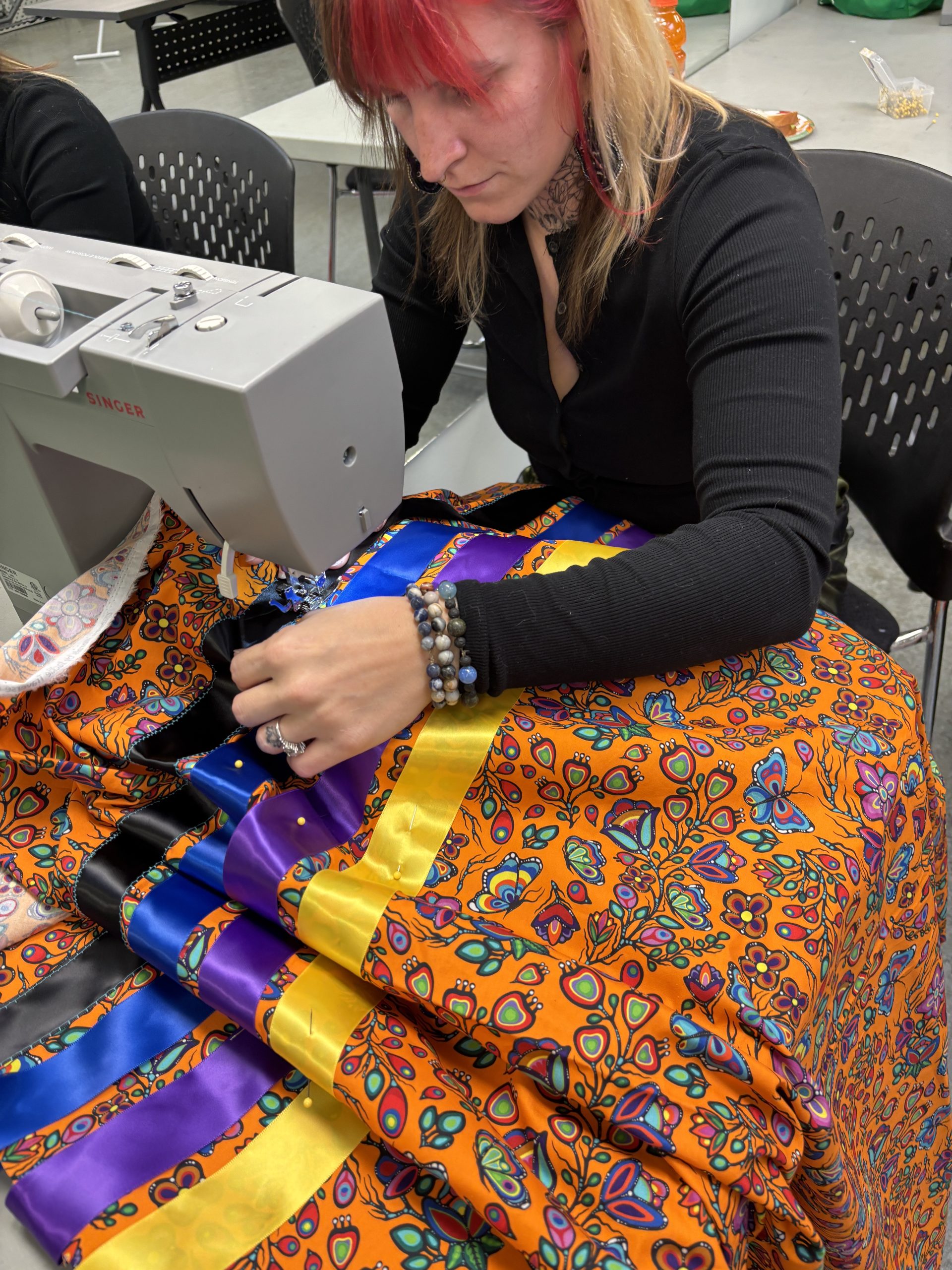
At a workshop last fall in Saskatoon, a participant finished sewing their ribbon skirt, put it on, and started to dance. They came back the next evening, not to sew, but simply to be in community, standing proud in a skirt they made.
For Syndel Thomas Kozar, the Two-Spirit Plains Cree artist who created the community space, moments like these are the whole point. This International Day of the World’s Indigenous Peoples, we share our conversation with Syndel about ribbon wear, gender self-expression, and how to build cultural spaces where everyone belongs, and why these spaces are so important.
Her answer? Community is medicine.
Representing Our Spirit
Syndel is an artist, facilitator, and double honours graduate in Indigenous studies and women’s and gender studies, and an urban member of One Arrow First Nation in Treaty Six territory. Syndel was raised by her granny and papa, both residential and day school survivors, and she grew up with limited access to her culture. Reconnection came later, through her studies and her healing journey.
Not every cultural space has felt safe, though. Syndel tells us that at a sweat ceremony she attended while she was still new to culture, she was shamed for her ribbon skirt being too short, a teaching delivered without context, she explains. Even traditional teachings, she notes, have been impacted by colonialism. Today, many teachings are passed down through a rigid gender binary, though Indigenous cultures historically celebrated diversity and Two-Spirit people. “When I was given that teaching that my skirt was too short, it wasn’t given in an empowering way. A lot of these teachings are about matriarchal power, but that wasn’t the way the teaching was delivered. It was delivered in a way that was disempowering to myself as a woman and a Two-Spirited person.”
“These teachings are meant to be empowering and supportive,” she says, “not used to police someone’s body or the way they’re representing themselves.”
Ribbon wear itself tells a story of change. It emerged after colonization, from trade between communities. “The definition of regalia is to represent yourself and represent your spirit,” Syndel says. “So why is it restrictive?”
From school project to ceremony
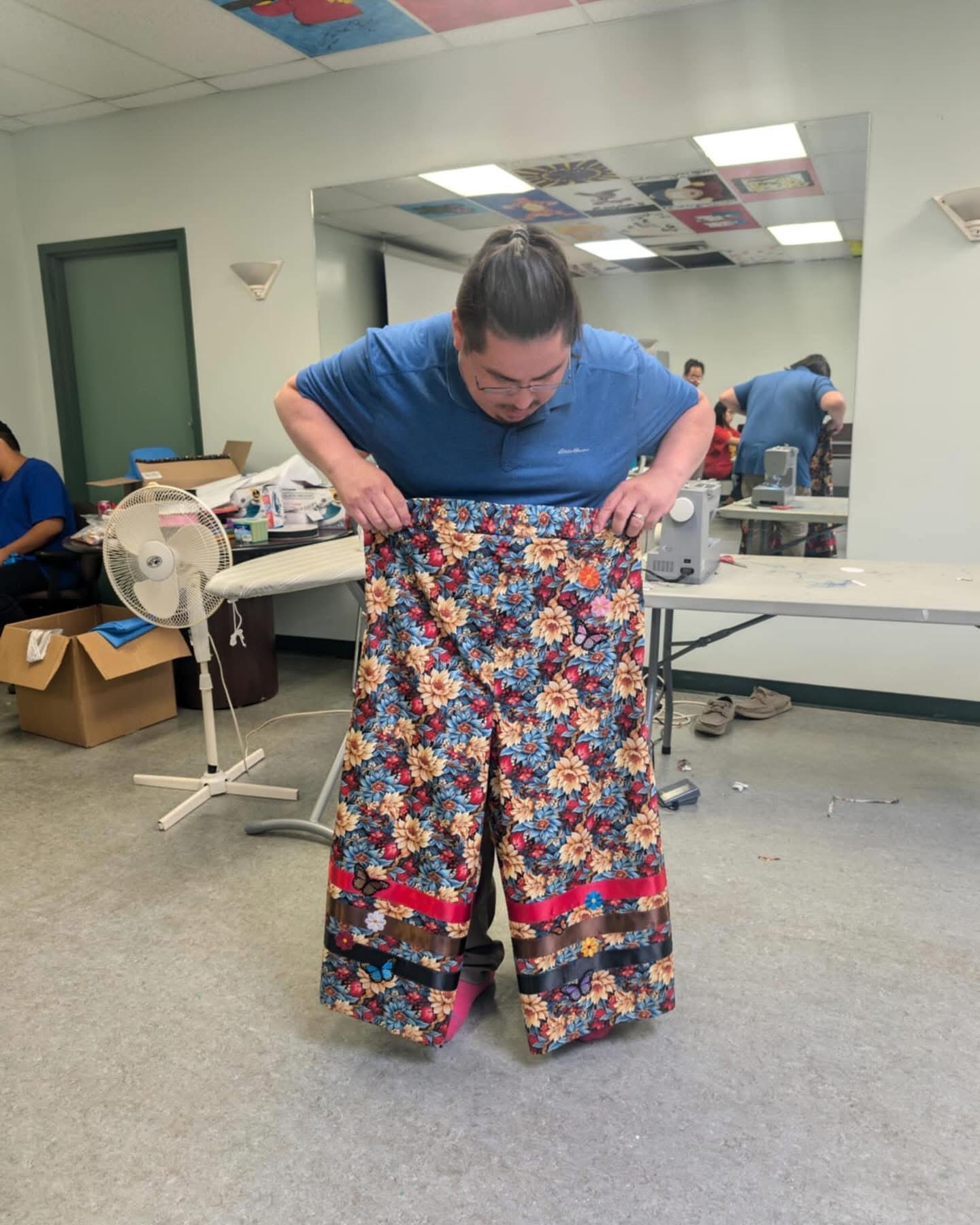
Representing Our Spirit started as a university assignment. For a final project in her queer sexualities class, Syndel researched the history of ribbon wear and sewed a pair of ribbon pants for a Two-Spirit classmate.
“I wanted to present pants as an option. I’m not saying pants are for queer people. I’m not saying pants are for men. I’m not saying pants are for women. I’m saying that we get to represent our culture in self-determined ways, and you should wear what’s comfortable for you, and pants are an option.”
When her classmate suggested turning the idea into a workshop, the stars aligned. Syndel attended Oxfam Canada’s SRHR Youth Summitt in Ottawa where she heard about a youth grant opportunity. She wrote her application in the airport on her way home, figuring she probably wouldn’t get it...
But she did.
Over the course of 8 days in 2025, Representing Our Spirit brought together 34 Indigenous and Two-Spirit youth to sew ribbon pants and skirts, with community spaces donated by White Buffalo Youth Lodge and Studio Q, and guidance from elders Maryann Whitefish, Corinne Stevens, and Shelley Belhumeur. The workshops opened and closed in ceremony, including a Two-Spirit pipe ceremony that, unlike many other gendered pipe ceremonies, everyone could take part in regardless of gender.
“I always say with my workshops, it’s meant to be more than just an art workshop. What I’m trying to really create here is community.”
During the first closing circle, participants shared that it was the first time they had engaged with a Two-Spirit elder and the first time, some shared through tears, they had felt safe in a cultural space.
“Culture is meant to be healing. It isn’t something at the end of the rainbow that you get to once you’re healed.”
Representing Our Spirit was funded as a sexual and reproductive health project, but for Syndel, it’s about more than that. “People think sexual health and reproductive rights sounds very clinical, but that’s not the reality,” she says. “Taking care of yourself, understanding yourself, and educating yourself in ways that are empowering and respectful to you, that’s part of sexual health and reproductive rights.” For Syndel and other Two-Spirit youth navigating spaces that weren’t made for them, SRHR includes identity, safety, culture, and belonging.
A year later: girlboss don't gatekeep
What started as three workshops has now become something more. Syndel now runs Crafting Kinship, an arts and culture program helping Indigenous youth on reconnection journeys to use art to reconnect with land, culture, and identity. Community relations blossomed, and she has facilitated a series of weekly workshops at Studio Q. More recently she did another collaboration with the University of Saskatchewan Gordon Oaks Red Bear Student Centre, coming full circle, from university project to program collaboration. And her bestie, Krista, who Syndel recalls she cheerfully “voluntold” to co-facilitate, has also led workshops of her own.
“A lot of the people who are in my other workshop have been championed into facilitating in those workshops. It’s been really beautiful to see youth feeling empowered in the spaces I’m creating and wanting to step up. Because a lot of what I do is empowering others. Girlbosses don’t gatekeep!”
When asked what her advice is for anyone looking for community, her answer was simple.
“If you feel disempowered in a space, it’s okay to take care of your spirit and move on. There are community spaces out there for you, and if you’re struggling to find one, create it. Once you start creating community, people will invest in you.”
Because after all, community is medicine.
Follow Syndel’s work on Instagram at @syn.shines and explore Crafting Kinship @crafting.kinship
The Stand Up For SRHR project is undertaken with the financial support of the Government of Canada, provided through Global Affairs Canada, and the generous Canadian public.



Discover more stories
On International Safe Abortion Day, we celebrate an important truth: rights only matter when people can exercise them. Around the world, progress has been made to advance sexual and reproductive health and rights (SRHR). Laws have changed, policies have evolved, and investments have expanded access to essential services. Yet for many women, girls and gender-diverse people, stigma, discrimination, lack of information, and under-resourced health systems continue to stand between rights on paper and reality.
Decisions about the future of Gaza must be made by Palestinians, with respect for basic human rights and self-determination.