From Rana Plaza to Today: Why Canada Must Act on Corporate Accountability
One of the deadliest industrial disasters of the 21st century unfolded in 2013, when the Rana Plaza building in Bangladesh collapsed. In a matter of moments, over 1,100 garment workers, most of them young women, lost their lives, and more than 2,500 others were injured. The world watched in horror as images of crushed concrete, trapped bodies, and desperate rescue efforts filled our screens. However, this was not a sudden or unforeseeable tragedy. Cracks in the building had been reported the day before. Workers had voiced their fears. Still, they were told to return to work and were trapped inside the building as it collapsed.
The collapse of Rana Plaza exposed a devastating truth: the global fashion industry, built on the labour of women, was failing them at every level. It revealed a system where fast fashion was prioritized over safe working conditions, where accountability was diffused across borders and where corporations, many based in wealthy countries like Canada, profited from conditions they did little to monitor or improve. Among the revelations was that a Canadian company was sourcing clothing from Rana Plaza, yet lacked sufficient oversight to ensure even the most basic standards of workplace health and safety. Affordable clothing was being subsidized by a devastating human cost.
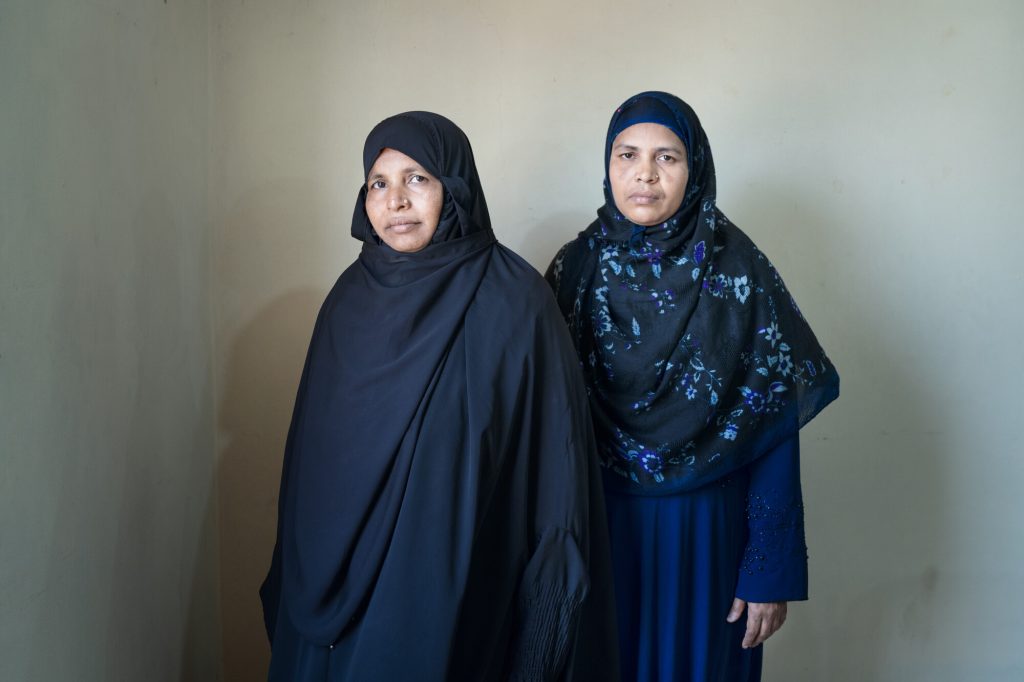
Nilufa Yesmin and Ajirun Begum are Rana Plaza Survivors. They have suffered from continuous health issues since the incident. None of them were able to do any work despite getting some occasional works from local tailors. Photo: Fabeha Monir/Oxfam
Since then, international pressure and tireless worker-led organizing have driven some improvements in factory safety, reducing the risk of catastrophic failures in parts of the industry. Yet, health and safety in Bangladesh’s factories remain deeply concerning, as shown by the April 4 fire at a gas lighter factory near Dhaka that left five workers dead. Moreover, safer buildings have not meant fairer working conditions. Workers still face poverty wages, excessive work hours, and intense pressure to meet production targets in a non-unionized environment. Gender-based violence and harassment remain widespread, particularly for the women who make our clothes. The fashion industry may be less visibly dangerous than it was in 2013, but it is far from just.
This pattern is not limited to fashion. Canadian companies continue to operate in ways that harm vulnerable communities both at home and abroad. In the mining sector, Canadian companies have been repeatedly linked to human and labour rights abuses, environmental destruction and the contamination of local ecosystems. Communities have suffered displacement, pollution, and long-term health impacts. These harms continue in part because the rules for companies are weak and accountability is limited.
The harm also extends to global arms trade. Canadian companies export weapons and weapons components that are used in war and conflict zones likely against civilians and in violation of international law, contributing to violence and human rights abuses. These transfers often happen through indirect routes, allowing Canadian companies to avoid scrutiny. Without strong laws, Canada risks being complicit in harm while claiming to stand for human and labour rights.
Canada’s response: more rhetoric than reform
Canada falls far short in meaningfully holding Canadian corporations accountable. Measures such as modern slavery reporting legislation and voluntary corporate social responsibility frameworks have been framed as progress. Yet in practice, they rely heavily on self-reporting, lack enforcement mechanisms, and impose few real consequences for non-compliance. Companies are required to disclose whether or not they have assessed the risks of forced labour in their supply chains – but are not required to actually investigate those risks in the first place, let alone to prevent or remedy harms.
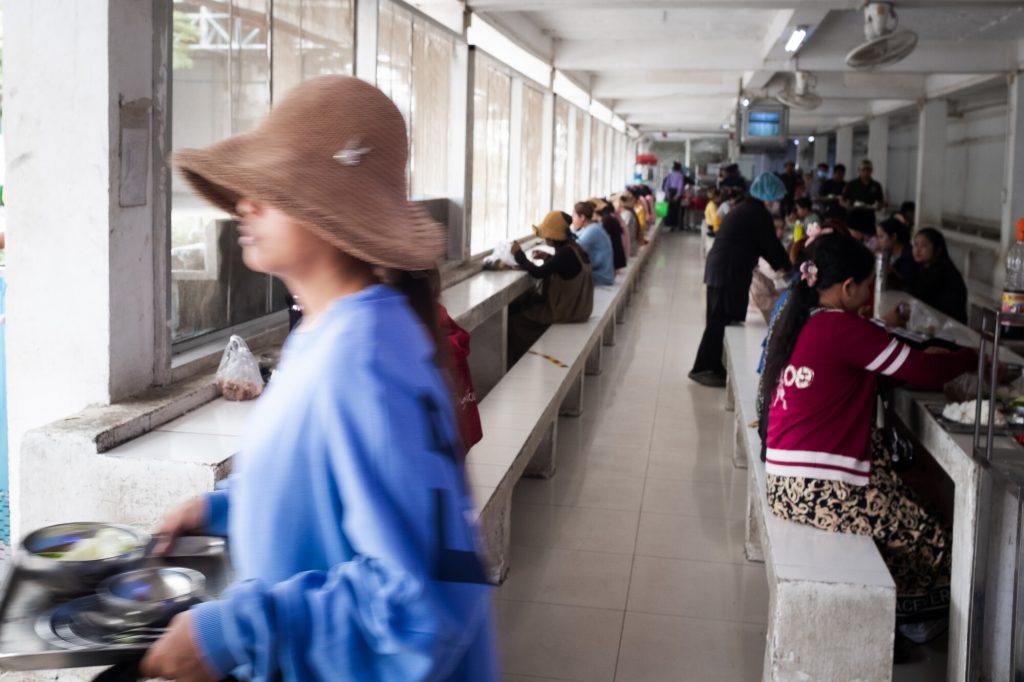
Workers at a garment factory in Phnom Penh, Cambodia. Photo: Caroline Leal/Oxfam
At the same time, oversight of Canadian businesses operating abroad remains weak. The Canadian government “expects” – but does nothing to actually require – Canadian companies respect human rights in their operations abroad.
Mechanisms intended to investigate corporate abuse, including the Canadian Ombudsperson for Responsible Enterprise (CORE) office, have been left to flounder. The government has left the position of CORE vacant for close to a year, meaning the office cannot process complaints, and the office lacks long-promised independence and investigatory teeth. Survivors of labour exploitation, environmental harm, or corporate-linked violence face significant barriers to seeking justice, particularly when abuses occur outside of Canada’s borders. The result is a system where harm is sometimes acknowledged, but rarely addressed in a way that shifts corporate behaviour.
This gap between commitment and action is not incidental – it reflects a broader policy approach that prioritizes narrowly-defined economic interests and voluntary compliance over binding regulation. As long as respect for human rights remains at the discretion of Canadian companies, they can continue to benefit from global systems of exploitation with limited accountability.
What real corporate accountability looks like
On the 11th anniversary of the Rana Plaza disaster, Canada’s Minister of Labour affirmed that “Canada’s supply chains are far-reaching” and that Canada has “an obligation to every single worker across them”. If Canada is serious about living up to those obligations it must take decisive action to prevent the harms that continue to be linked to Canadian corporations – such as labour rights violations, extractive industry exploitation, and weapons exports which fuel growing human rights abuse – it must move beyond voluntary and reporting-only approaches and adopt a mandatory human rights due diligence law. This means requiring companies to actively identify, prevent, and address human rights and environmental risks throughout their global operations and supply chains – not simply reporting on whether or not they have bothered to look.
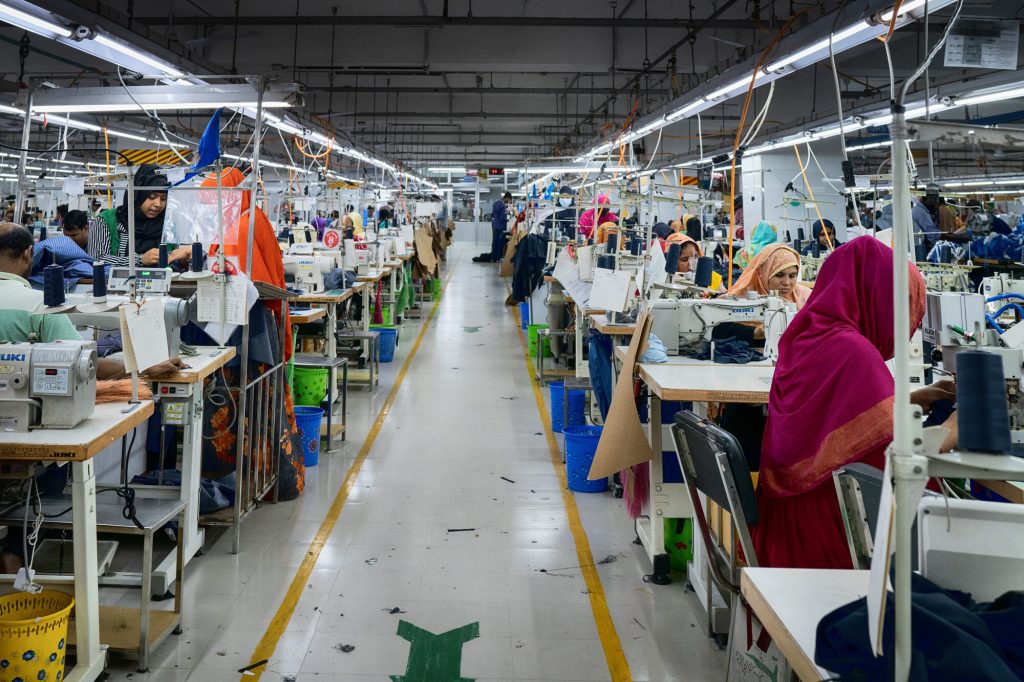
Textile workers working inside a garment factory in Savar, Bangladesh. Photo: Fabeha Monir/Oxfam
To be effective, such legislation must include strong enforcement mechanisms. Companies that fail to meet their obligations should face meaningful penalties, including fines and potential civil liability. Furthermore, affected communities and workers must have clear pathways to seek remedy in Canadian courts, regardless of where the harm occurred. Without access to justice, accountability remains incomplete.
The government of Canada should:
- Adopt human rights and environmental due diligence legislation. Canadian civil society has developed a model law which the government could table at any time.
- Appoint a new Canadian Ombudsperson for Responsible Enterprise, and empower the office with real independence and robust investigatory powers
More than a decade after the Rana Plaza tragedy and amid ongoing harm by various Canadian businesses, the question is not whether we have learned, but whether Canada will finally act.
The lives lost should have marked a turning point, a moment to say clearly that no job, no product, no profit is worth a human life. And yet, from factories to mines to conflict zones, similar patterns of exploitation persist – often hidden and too often ignored.
Canada has the power to do better. It has a duty to do better. Without bold action – as called for by directly-impacted people and by Canadians standing in solidarity from coast to coast – Canada will continue to be complicit in serious human rights violations, and risks contributing to future tragedies like Rana Plaza.
Add your voice to the call for a strong corporate accountability law.
Co-authors: Nirvana Mujtaba (Oxfam Canada) & Aidan Gilchrist-Blackwood (Canadian Network For Corporate Accountability)
Discover more stories
On International Safe Abortion Day, we celebrate an important truth: rights only matter when people can exercise them. Around the world, progress has been made to advance sexual and reproductive health and rights (SRHR). Laws have changed, policies have evolved, and investments have expanded access to essential services. Yet for many women, girls and gender-diverse people, stigma, discrimination, lack of information, and under-resourced health systems continue to stand between rights on paper and reality.
Decisions about the future of Gaza must be made by Palestinians, with respect for basic human rights and self-determination.