Black History Month – Interview with Radia Mbengue
Our Oxfam Canada colleague Radia Mbengue, Humanitarian Program Officer, was recently interviewed by Cooperation Canada as part of a Black History Month series highlighting Black changemakers, innovators, and disruptors in Canadian international cooperation. We're proud to share the full conversation here, where she reflects on her journey, values, and vision for equity-centred international cooperation.
Why did you decide to work in international cooperation and what have been some career highlights?
My decision to work in international cooperation is deeply rooted in my lived experience. Growing up in Senegal, I witnessed early on how access to resources, rights, health care, education and opportunity is often determined by where you are born and by your race and gender. These realities shaped my worldview and instilled in me a deeply intersectional lens that continues to guide both my personal and professional life.
As a Black Senegalese woman in this sector, I am driven by a commitment to amplify the voices of those most marginalized, particularly Black women, because we deserve not only to be consulted, but to wield real power and occupy decision-making spaces. Over the past five years, I have worked across international development and humanitarian contexts, specializing in adaptive social protection, gender-responsive education and climate justice. My work has involved designing and managing multi-million-dollar programs across Africa, the Middle East and Asia, always with an emphasis on dignity, equity and accountability to affected communities.
Some of my career highlights include leading and organizing a delegation of Black and Indigenous land defenders to COP27, where we centered the disproportionate impacts of extractive industries on Black and Indigenous communities and challenged exclusionary climate governance spaces. I also served as Equity Chair at KAIROS Canada, where I facilitated organizational conversations on anti-racism and microaggressions and successfully developed a proposal to the Canadian Race Relations Foundation to organize a Black History Month event. The event brought together speakers from across the African diaspora, racialized communities in Canada and a justice partner from South Sudan to explore anti-colonial resistance, youth leadership and collective visions for the future.
In parallel, I have supported Black communities and young leaders in Canada through climate justice workshops, facilitating conversations on Black ancestries, ecologies and knowledge systems and by accompanying Black women through environmental leadership programs that affirm their expertise and lived realities.
In my current role at Oxfam Canada, I manage a Geared for Success project in South Sudan and Uganda, expanding gender-responsive and inclusive education for refugee and internally displaced children, particularly girls and learners with disabilities. Working in crisis-affected contexts has reinforced my belief that education is not only a fundamental right, but a critical protection tool for children navigating conflict, displacement and climate shocks.
What experiences have influenced your career as a Black person in the international cooperation sector?
Like many Black professionals in international cooperation, I have experienced moments where my expertise was questioned, my contributions minimized, or my voice sidelined. Rather than pushing me out of the sector, these experiences strengthened my resolve to take up space and advocate for equity both within institutions and in the ways global crises are understood and addressed.
I have been especially shaped by witnessing how violence affecting Black communities whether in Sudan, South Sudan, the Democratic Republic of Congo, or elsewhere on the continent is routinely normalized, underreported, or deprioritized in global media and funding decisions. This selective attention has material consequences for people’s lives and it fuels my ongoing advocacy for so-called “forgotten crises.”
My background in monitoring, evaluation and learning has also profoundly shaped my work. I have seen how data, indicators and reporting frameworks directly influence access to funding, visibility and political attention. Through feminist and participatory MEAL approaches, I focus on measuring not only outputs, but shifts in power, voice, dignity and gender norms. This work strengthens policy and programming while ensuring that Black-led and women-led organizations are not erased by extractive or overly technocratic systems of accountability.
In the face of shrinking civic space and the silencing of marginalized communities, what are your hopes for the future and what advice would you give to aspiring change-makers, advocates, or allies?
My hope is that international cooperation continues to move toward genuinely feminist, decolonial and localized approaches where communities are not treated as beneficiaries, but as leaders, knowledge holders and decision-makers. This requires letting the most marginalized speak for themselves, resisting tokenism and directly funding community-led initiatives.
For organizations and allies, this means reducing barriers to funding access, supporting capacity strengthening in non-extractive ways and investing intentionally in the professional growth of Black professionals, particularly Black women. It also demands sustained internal work to confront bias within hiring practices, leadership pipelines and organizational cultures.
For those entering the sector, my advice is to remain rooted in your values, build solidarity across movements and remember that meaningful change often comes from challenging systems not simply navigating them. Promoting localization, centering lived experience and redistributing power are not trends; they are essential if we are serious about building a more just and effective international cooperation sector.
Discover more stories
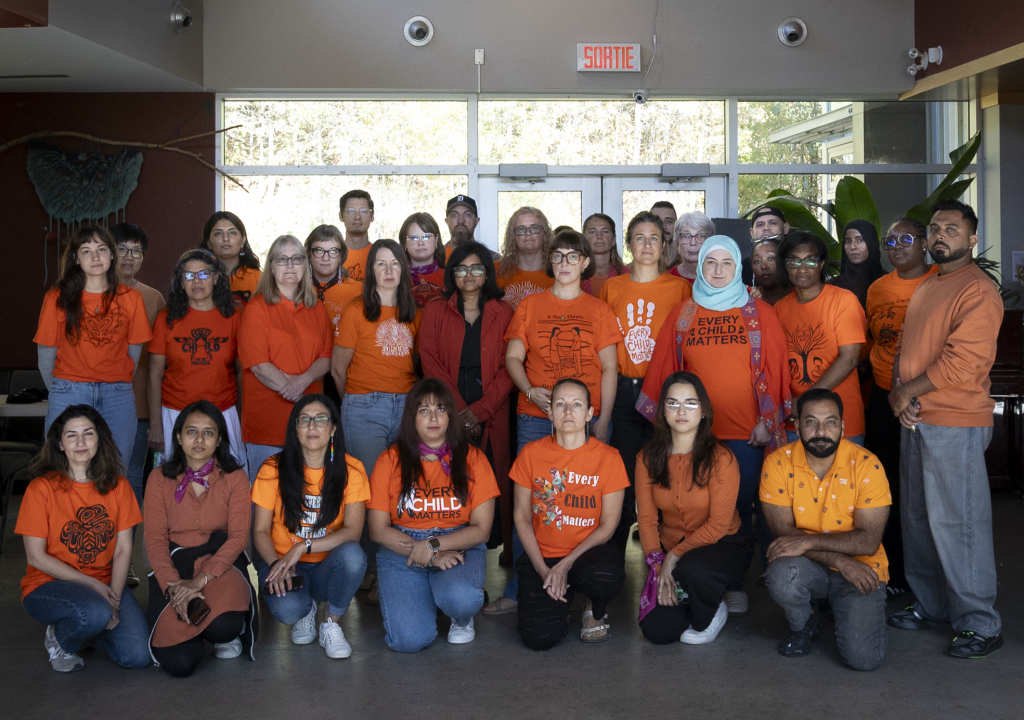
At Oxfam Canada, we believe that fighting inequality requires challenging the systems that create and sustain it. That’s why our commitment to anti-racism, JEDI, and decolonization is not a side project-it’s at the heart of everything we do.
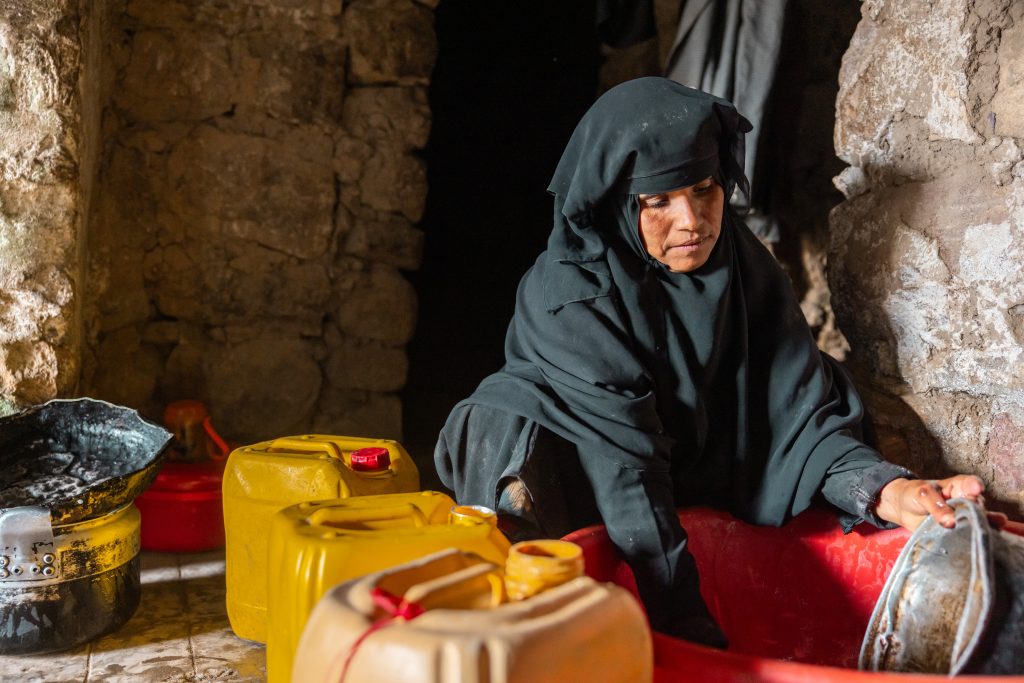
Water is a right, not a luxury. Despite that, on this World Water Day, clean water remains out of reach for millions of people. In Yemen alone, more than 17.8 million people, including 9.2 million children, lack reliable access to safe drinking water.