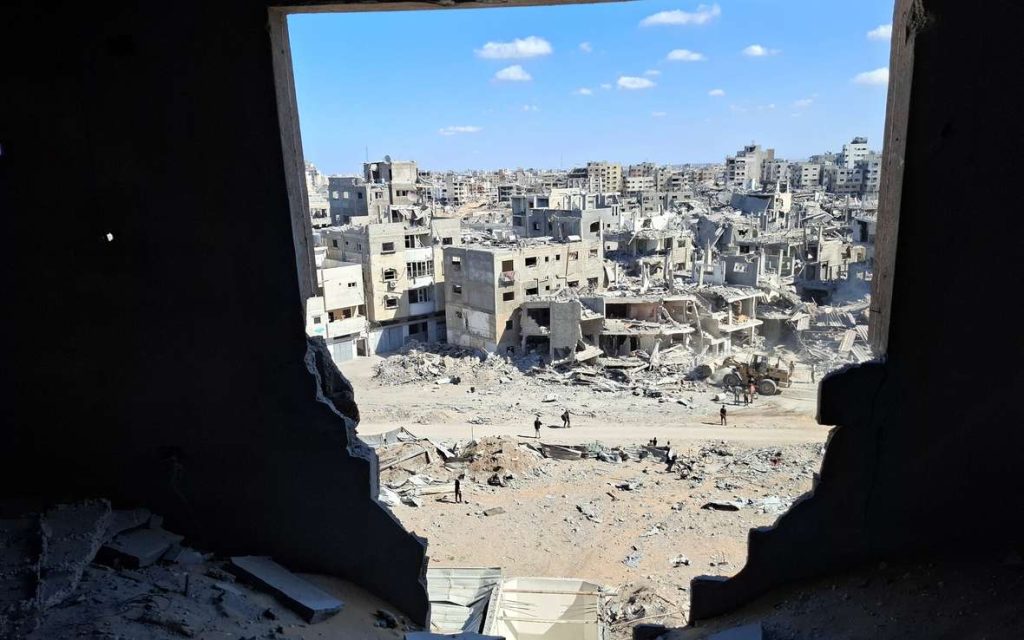
It’s Time to End All Israeli Hostilities in Lebanon
Photo Credit: Christian Harb
Despite a ceasefire being in place since early March, the Israeli military has been employing a range of tactics with devastating consequences on the civilian population in Lebanon. Violations of the ceasefire extend beyond direct military attacks. Continued occupation, surveillance practices, and other actions that undermine civilian protection all contribute to cycles of violence and instability, making a lasting peace increasingly difficult to achieve.
Ceasefire Violations Continue
The human toll has continued to rise in Lebanon as a result of ongoing Israeli military actions. At least 3,711 people have been killed, including 247 children and 132 health sector workers, while 11,483 people have been injured. Oxfam documented hundreds of Israeli military operations in southern Lebanon in the week following the ceasefire, including approximately 190 air strikes, 80 shelling operations, and 45 drone strikes, among other reported violations. Between April 17 and May 11, 3318 ceasefire-related violations were recorded.
At the same time, Israeli forces continue to occupy approximately 5% of Lebanese territory—more than 500 square kilometres. This occupation is accompanied by persistent surveillance, auditory warfare, and the reported use of toxic materials such as white phosphorus, raising serious concerns under International Humanitarian Law (IHL).
Digital Rights Under Threat and Surveillance
Evidence points to the growing role of digital surveillance in the conflict. According to SMEX, a leading organization advancing digital rights across Southwest Asia and North Africa, reported surveillance activities include the use of IMSI catchers and fake mobile towers, technologies that can collect personal data from mobile devices. The organization also points to the use of artificial intelligence systems, such as The Gospel and Where’s Daddy, which can be used to monitor mass population movements and potentially transfer collected data across borders.
SMEX warns that spyware may also be deployed in ways that allow access to personal messages, emails, microphones, cameras, and location data without users taking any action. These practices raise profound concerns regarding privacy, human rights, and national sovereignty.
The Hidden Mental Health Crisis
Constant drone activity and military aircraft presence have contributed to what experts describe as “drone-induced anxiety,” exacerbating stress, fear, and symptoms of post-traumatic stress disorder among affected communities.
For children, the consequences may be particularly severe. Oxfam spoke with Embrace, a Lebanese mental health organization, about the long-term effects of living under persistent uncertainty and threat. As Peter Wanna, a psychotherapist at Embrace Mental Health Center, explains: “Children heavily rely on environmental predictability to build a baseline of safety.” He warns that the consequences could extend far into the future: “We’re looking at a future that is quite devastating for the upcoming generation. We are concerned about increased vulnerability to severe mental health difficulties among future generations.”
Canada Must Match Words with Action
On April 16, 2026, Canada’s Minister of Foreign Affairs reaffirmed Canada’s support for Lebanon’s sovereignty, territorial integrity, and state institutions, while also expressing support for the protection of civilians and civilian infrastructure.
This support was upheld again recently on June 5th, 2026 in a joint statement by Minister Anand along with Ministers of Foreign Affairs across the globe as they stated: “We express our profound concern over the continued escalation of hostilities in Lebanon and welcome ongoing efforts to implement the ceasefire. … We call on Israel to respect Lebanon’s sovereignty and territorial integrity and to stop its military escalation.”
Yet statements alone are insufficient for communities that continue to live under the threat of violence and displacement. Sustainable peace requires more than ceasefire declarations. It demands accountability, respect for international law, and concrete action to end ongoing hostilities.
Oxfam’s Recommendations
Oxfam is calling on all parties to immediately cease military operations and end violations of international humanitarian law. The organization further calls for Israeli forces to withdraw from occupied Lebanese territories and to enable the safe, voluntary, and dignified return of displaced communities.
Continued support is needed for integrated approaches that connect humanitarian assistance, long-term development, and peacebuilding efforts. Humanitarian needs remain immense, while economic and social conditions continue to deteriorate.
Finally, Oxfam is urging Canada and other governments to take concrete and lawful measures to ensure compliance with international law and to press for an end to hostilities. As there have been no calls to action for the full withdrawal of the Israel military from occupied territories, Canada, together with its allies, must step up to hold Israel accountable. Lasting peace in Lebanon will require not only diplomatic commitments, but meaningful accountability and sustained international engagement.
Without decisive action, ceasefires will remain words on paper, while communities in Lebanon continue to bear the human cost.
Discover more stories
On International Safe Abortion Day, we celebrate an important truth: rights only matter when people can exercise them. Around the world, progress has been made to advance sexual and reproductive health and rights (SRHR). Laws have changed, policies have evolved, and investments have expanded access to essential services. Yet for many women, girls and gender-diverse people, stigma, discrimination, lack of information, and under-resourced health systems continue to stand between rights on paper and reality.
Decisions about the future of Gaza must be made by Palestinians, with respect for basic human rights and self-determination.