Myths about Tax Freedom Day – Debunked!
Each year, "Tax Freedom Day" is promoted as the date when Canadians supposedly stop working for the government and start working for themselves. The framing by the Fraser Institute suggests that taxes are primarily a burden on Canadians, as governments take away money from workers. While the messaging may resonate during a period of economic insecurity, it presents a deeply misleading picture of how taxes, public services and inequality actually function in Canada.
The real pressures ordinary people face today are not the result of taxation. They are a result of wages that don't keep up with the rising cost of living, soaring corporate profits, unaffordable housing, weakened public services, and growing wealth concentration.
In reality, Canada's tax system is shaped by deep inequality. While workers pay taxes directly from their paycheck, the super-rich and large corporations benefit from tax loopholes, preferential treatment of capital gains, offshore tax avoidance, and hefty CEO compensation packages taxed at lower rates than employment income.
At the same time, public services that people rely on, including healthcare, education, childcare, pensions, public transit and social supports, are largely funded through taxation. These services reduce costs for households, improve quality of life and strengthen economic security for everyone.
Hard working Canadians deserve a fuller and more honest conversation about affordability, taxation and growing inequality. This is why we are busting these myths, to create space for a more constructive conversation about what truly drives the affordability crisis and economic insecurity, and the types of public policies needed to build an equal Canada for all.
Canadians carry the tax burden equally
No. The ultra-rich pay a lower share of their income in taxes than ordinary Canadians.
Canada's tax system is supposed to be progressive, meaning people with higher incomes should pay a larger share of their income in taxes. But the reality is different. In practice, ultra-rich Canadians face lower effective tax rates and pay closer to 24% of their income in taxes, while many workers and middle-income earners pay on average 37%. In 2025, income inequality reached a record high, and the wealth gap between the richest and the rest continues to widen. At the same time, many Canadians are facing a rising cost of living, record food bank usage, and growing housing insecurity. The wealthiest Canadians benefit from preferential tax rates, because Canada's tax system treats income earned from wealth, such as capital gains from stocks, far more generously than income earned from wages. Some also move money into offshore tax havens to avoid paying taxes, ultimately costing Canada $15 billion in lost tax revenues that could fund public services. So while it may seem like everyone carries the tax burden equally, the ultra-rich are not paying their fair share.
Taxes are the reason for the affordability crisis in Canada
The affordability crisis is being driven by corporate concentration and profiteering, not by taxes.
People across Canada are feeling the squeeze from expensive groceries, rising rents, and soaring gas prices. Millions are relying on food banks, and many families are struggling to afford basic necessities. These pressures are not the result of taxes. Instead, they are linked to the increasing concentration of economic power among large corporations, which can charge higher prices because they dominate the market. Taxes, by contrast, help pay for services that make life more affordable, including public healthcare, childcare, education and public transit.
A person earning $90,000 a year pays about 24.4% in taxes, while a typical top CEO pays just 26.1%, despite earning over 180 times as much.
Analysis by Canadians for Tax Fairness
Average Canadians earn six figures and pay over 40% in taxes
No. Average Canadians earn far less than six figures and do not pay over 40% of their income in taxes.
Tax Freedom Day calculations often rely on averages that do not reflect the financial reality of Canadians. Statistics Canada reported that the average income in 2024 was only $61,600, well below six figures. While some high-income earners such as CEOs of large businesses bring the average up, most workers earn considerably less. In reality, the median income of Canadians is even lower, at $46,300 per year. According to the Canadian Centre for Policy Alternatives, the top 100 CEOs in Canada earn $16.2 million a year on average. However, much of that income is taxed at lower rates or delayed, because it comes from stocks and stock options rather than wages, showing how unequal the Canadian tax system is. An analysis by Canadians for Tax Fairness shows that a person earning a salary of $90,000 a year would pay about 24.4% in taxes, while a typical top CEO would pay only slightly more at 26.1%, despite earning over 180 times what the salaried worker makes.
Tax Freedom means fairness
Taxes fund public services that reduce inequality and make life more affordable for everyone.
Tax Freedom Day suggests that Canadians work for the government until a certain date and only begin working for themselves afterwards. But this framing ignores what taxes pay for. Taxes fund public healthcare, schools, childcare, infrastructure, emergency services and income support that Canadians rely on every day. Fairness is not measured simply by the amount of taxes people pay, but by whether they can access the services and opportunities they need to thrive. Without these services, Canadians would face higher out-of-pocket costs and greater barriers to crucial support. Moreover, eroding public services disproportionately impacts marginalized communities, including women living in poverty, racialized communities and disabled people. Real fairness means ensuring everyone can access the quality services, infrastructure and opportunities needed for a dignified life. Canadians deserve a tax system that works for everyone, not just the wealthiest few.
Take action today
Send a letter to Finance Minister Champagne, calling for a wealth tax on extreme wealth and an excess profits tax on major corporations to fund the public services Canadians rely on.
Discover more stories
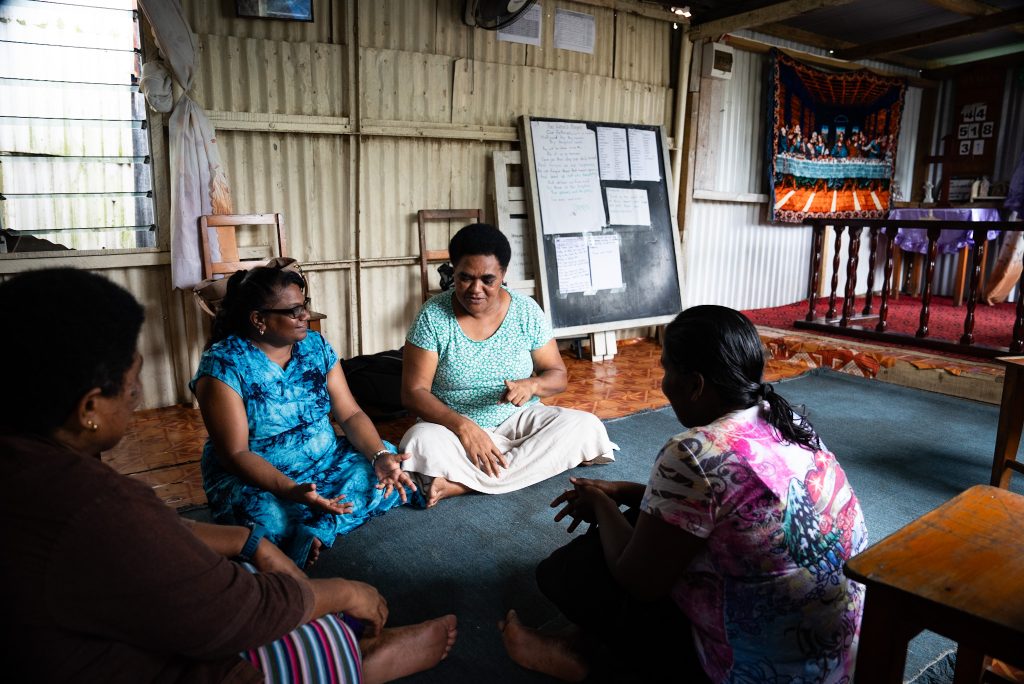
During a recent visit to Oxfam Pacific in Suva, Fiji, I spent the day in discussions with colleagues on the Women Power project — an initiative focused on strengthening women’s leadership and economic resilience across the Pacific.
The Stand Up program aims to raise awareness about sexual and reproductive health and rights across Canada by supporting community-based public engagement initiatives spearheaded by youth (aged 18 to 29) and women's rights or youth-led organizations.