Updates from Gaza – Humanitarian crisis, Israeli legislation, and Canada’s response
Updates from Gaza – Humanitarian crisis, Israeli legislation, and Canada’s response
Despite a ceasefire that has been in place for six months the humanitarian crisis in Gaza continues. Across the West Bank, there has been a marked rise in violence targeted at Palestinians. At the same time, Israel is advancing policies that restrict the ability of humanitarian organizations to operate in Gaza, and has passed legislation that dehumanizes Palestinians. Here at home, the Canadian parliament recently debated legislative measures that would have stopped the flow of weapons from Canada to Israel – the bill was ultimately defeated.
With so much happening at present, we wanted to provide you with updates on all of these moving pieces.
Enaam, a food security officer, speaks from one of the commercial shops in Gaza, explaining this important intervention by Oxfam, to help maintain food security.
What is Oxfam doing to help aid get into Gaza?
Oxfam and other UN agencies are doing everything we can, through partners, to deliver life-saving aid. Oxfam has worked closely with our partners in Gaza to reach more than 1.4 million people with humanitarian assistance. Since October 2023, our water, sanitation, and hygiene programs have reached over 800,000 people.
Since the peace deal was agreed to, Oxfam has continued to source materials within Gaza in order to scale up its work to assist partner organizations, people displaced by the conflict, and those on the move and choosing to return to their homes. This includes the installation of 600 latrines last year in southern Gaza, a major accomplishment.
With your support, Oxfam and our local partners are focusing on a range of emergency interventions, including:
- Food
- Clean water
- Access to hygiene items, including menstrual products
- Rehabilitation of water and sanitation systems and wells
- Solid waste management
- Training and supplies for home gardens to help people grow vegetables
- Support for survivors of gender-based violence
The peace deal promised unimpeded humanitarian assistance, and we urgently need full access for all qualified humanitarian organizations.
Security, humanitarian aid, and a court petition to secure access
Approximately six months into the ceasefire in Gaza, Israel continues the use of airstrikes, shelling, and gunfire, and over this period, more than 730 Palestinians have been killed and more than 2,000 injured. In just one week between late March and early April, at least 20 Palestinians were killed and dozens more injured (OCHA). Gaza's population continues to experience profound psychological strain as residents report nightly explosions, compounding existing trauma.
While initially there were improvements in humanitarian access, the volume of humanitarian aid entering Gaza remains largely insufficient, and has dropped significantly, with repeated disruptions to crossings and humanitarian operations severely limiting access to life-saving assistance. Today, food, sanitation, health and shelter needs remain urgent. Even where famine has been partially averted, hundreds of thousands of people continue to face catastrophic levels of hunger and malnutrition, with children and pregnant women at particular risk.
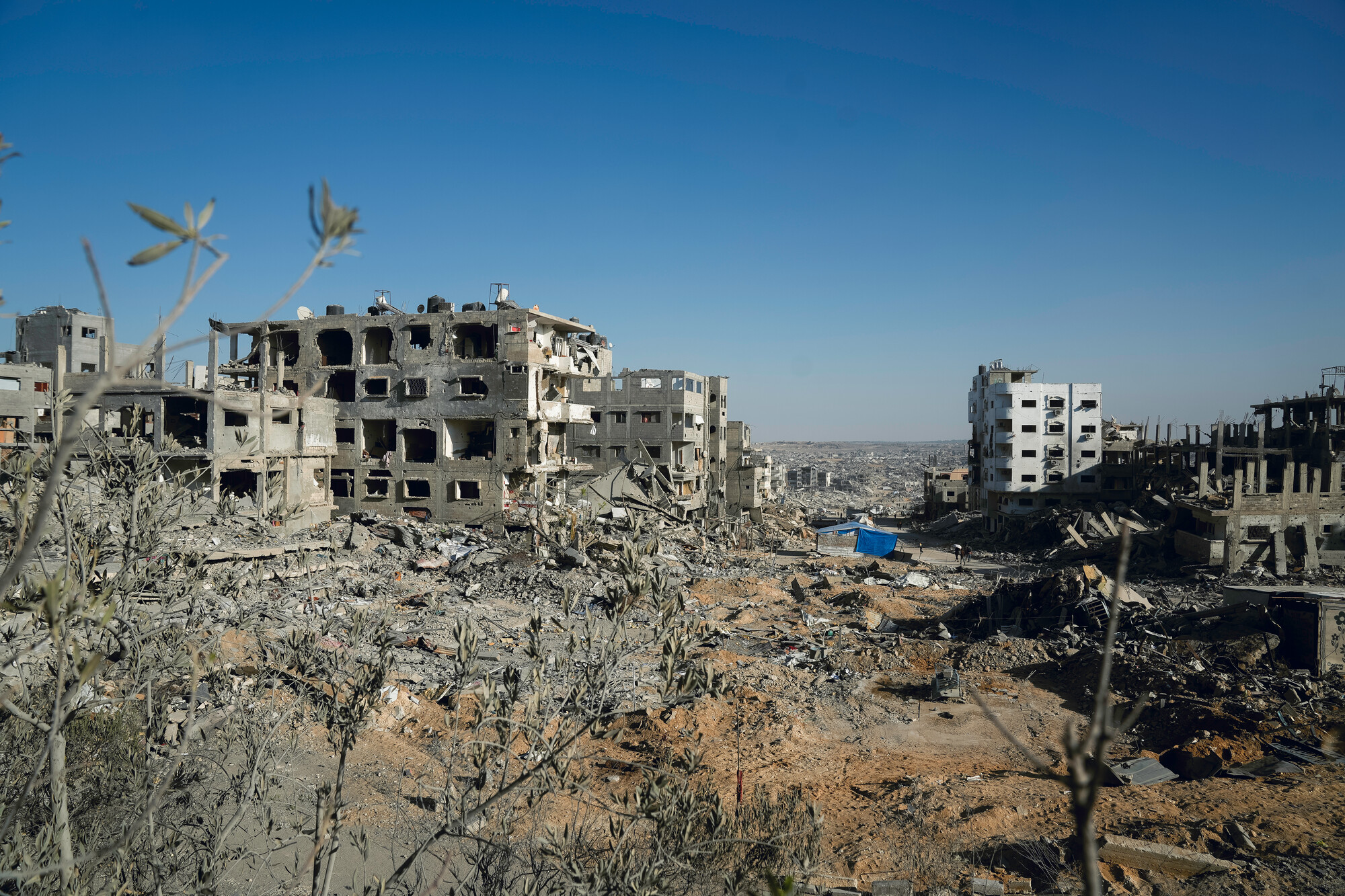
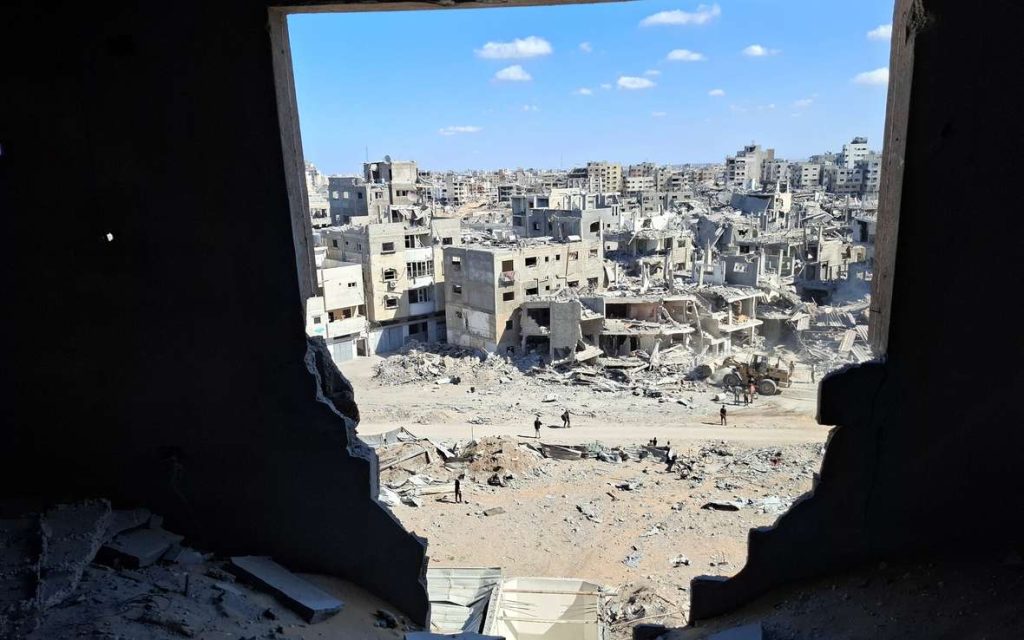
After the ceasefire, images reveal widespread destruction across Gaza — especially in Sheikh Radwan, Zeitoun, and Tel al-Hawa — where residential and commercial buildings and core infrastructure are nearly wiped out. Photo: Mosab Al-Borno/ Alef Multimedia/ Oxfam
Despite the urgent need, the government of Israel announced that it will not allow 37 major international aid organizations – including Oxfam – to renew their registration to work in Gaza, further limiting aid. This move has no factual or legal basis, and Oxfam with 17 other leading international humanitarian organizations and the Association of International Development Agencies (AIDA), launched a legal proceeding on February 24, 2026, to challenge the new Israeli registration system in the Israeli High Court. On February 27, 2026, the court granted an interim order which would prevent the cessation of all activities until a final ruling is reached. In late March, an initial hearing was held after which petitioning organisations confirmed they would advance their petition. A final ruling is expected in the coming weeks.
This legal battle underscores a broader and concerning trend: the shrinking of humanitarian space at a time when needs are at their highest. Restrictions on humanitarian organizations whether through administrative barriers, operational constraints, or threats to staff safety directly translate into reduced access to food, healthcare, and protection for civilians.
The West Bank: Escalating violence, displacement, and trade with illegal settlements
Throughout early 2026, the humanitarian situation in the West Bank remained volatile amid continued military operations, settler violence, displacement, and movement restrictions affecting Palestinian communities. According to humanitarian monitoring, multiple Palestinians were killed and many others injured during Israeli military operations, confrontations during military incursions, and settler attacks.
Reporting from the United Nations Office for the Coordination of Human Affairs indicates that more than 900 Palestinians have been displaced across the West Bank since the beginning of 2026, largely due to settler violence, demolitions, and access restrictions affecting Palestinian communities. These dynamics disproportionately affect Bedouin and herding communities, whose livelihoods depend on access to grazing land and water sources.
Intensifying movement restrictions also remain a critical issue across the West Bank, as Palestinian communities are further fragmented, constraining access to services, employment, markets, and humanitarian assistance.
At the policy level, recent developments raise concerns regarding the expansion of Israeli administrative control over land in the West Bank. The Israeli government approved measures to register large areas of land as "state property," a step widely criticized by international actors as potentially facilitating de facto annexation and further undermining Palestinian land rights.
As more Palestinians are displaced in the West Bank, and as more Palestinian land is illegally annexed by Israel, Oxfam has been undertaking advocacy targeted at stopping trade with illegal settlements and calling for the suspension of the Canada Israel Free Trade Agreement. Earlier this year, Oxfam Canada participated in a joint press conference with the National Council for Canadian Muslims, calling on the federal government to take more action to end trade with illegal settlements.
Israel has granted itself another means to dehumanize, suppress, and kill Palestinians
On March 30th, the Israeli Knesset passed a bill mandating the death penalty for Palestinians convicted of murdering Israelis. This Bill is another horrifying act of violence which proves the system of institutionalized discrimination and systematic oppression of the Palestinian people. The Israeli government has granted itself another means to dehumanize, suppress, and kill Palestinians.
Israel is violating international law.
This new law effectively ensures that the death penalty in Israel will apply only to Palestinians, even as the illegal Israeli occupation has lately seen a surge in the coordinated attacks and executions of Palestinians by settler militias and military. Israel holds more than nine thousand Palestinians in its jails – many without charges or due process, and subject to inhumane conditions, starvation and torture as state policy.
Legislation to stop weapons transfers to Israel defeated
Despite the ongoing genocide in Gaza, Canada continues to send weapons and components to Israel. In the Fall of 2025, Vancouver East Member of Parliament Jenny Kwan tabled legislation - Bill C-233, An Act to Amend the Export and Import Permits Act – that would have closed the legislative loopholes that allow Canadian-made weapons to be transited to third countries like Israel, via the United States with little to no government oversight. In the lead-up to the vote, Oxfam Canada participated in a joint press conference with other supportive organizations, encouraging MPs to vote in favour of the legislation.
On March 11, Bill C-233 was voted on at second reading – it was defeated with 295 MPs voting against the legislation and 22 voting in favour. You can see how all MPs voted here.
What now?
The situation in Gaza and the West Bank is not inevitable. It is the result of political choices, and it can be changed through political action. The federal government and the international community should work to ensure that:
- The ceasefire is upheld and permanent peace agreement is in place.
- Israel facilitates the registration of established humanitarian NGOs to allow them to continue deliver aid and assistance, and that the independence of humanitarian organizations is protected.
- Israel allows full and unrestricted humanitarian access to Gaza, fully opening all crossings and ending arbitrary restrictions on freedom of movement and access.
- Trade with illegal Israeli settlements is banned and that Israel's moves to expand illegal settlements in the West Bank is in breach of the ICJ and the UNGA.
- The suspension of the Canada-Israel Free Trade Agreement.
- The Canadian parliament must take legislative measures that would stop the flow of weapons from Canada to Israel.
- Apply pressure on the Israeli government to publicly and immediately row back the death penalty bill.
- International humanitarian and human rights law is upheld.
- The root causes of the crisis are addressed, including occupation, displacement, and systemic inequality.
The question is no longer whether the world understands the scale of the crisis. The question is whether it is willing to act.
Discover more stories
Decisions about the future of Gaza must be made by Palestinians, with respect for basic human rights and self-determination.
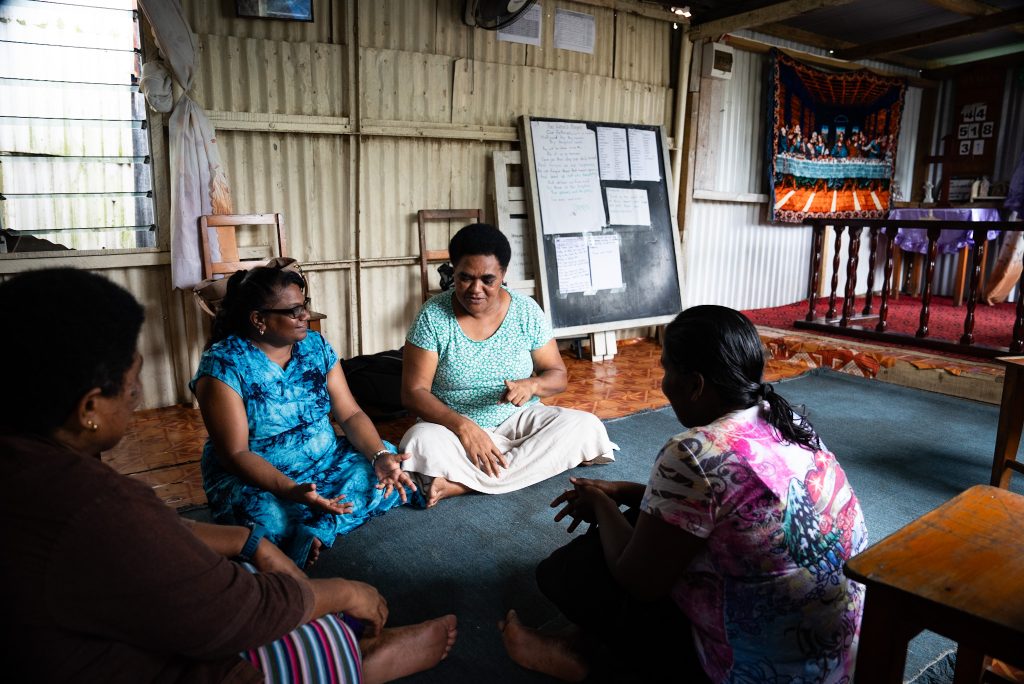
During a recent visit to Oxfam Pacific in Suva, Fiji, I spent the day in discussions with colleagues on the Women Power project — an initiative focused on strengthening women’s leadership and economic resilience across the Pacific.